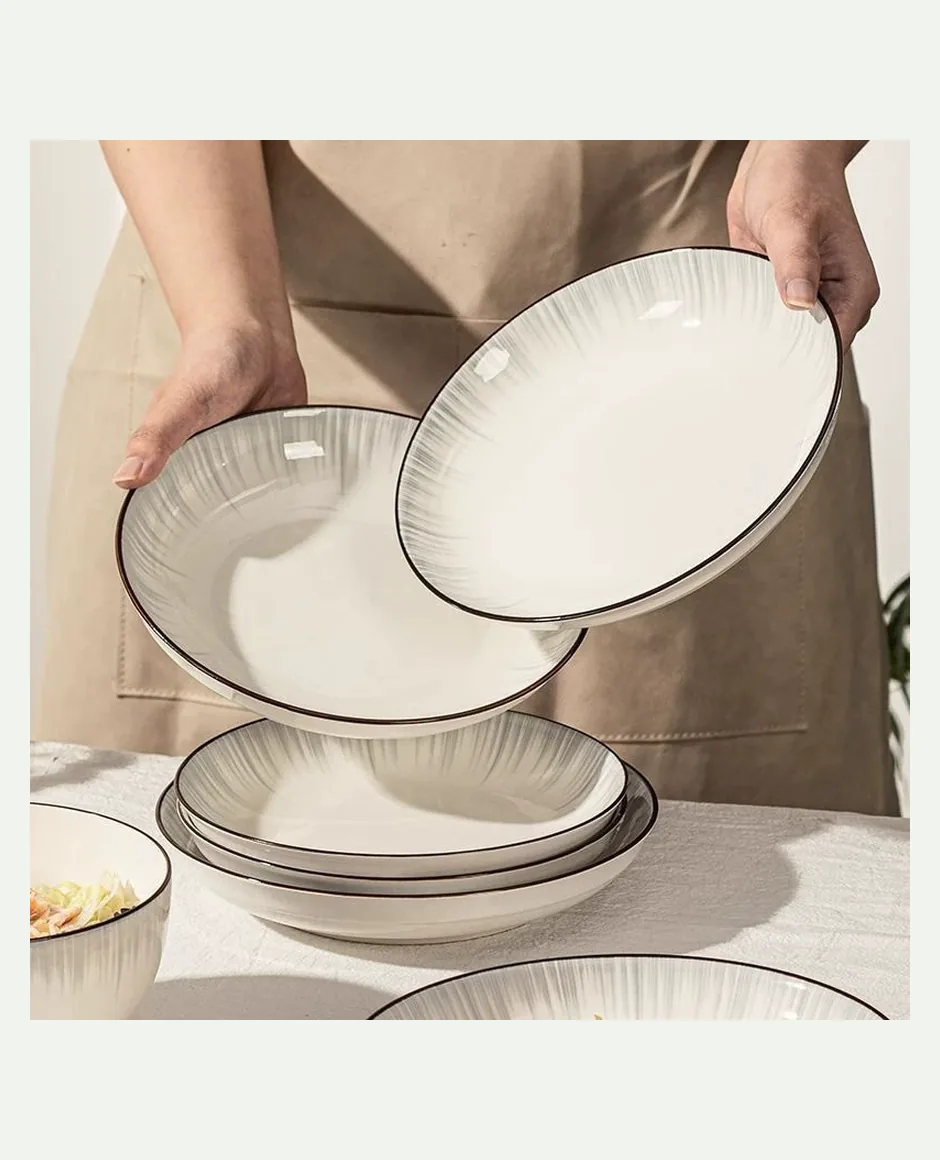
Can you supply 10-inch dinner plates for restaurant use?
Yes—10-inch is a standard dinner plate size we produce in porcelain and stoneware, available for sampling and volume orders.
Read answer →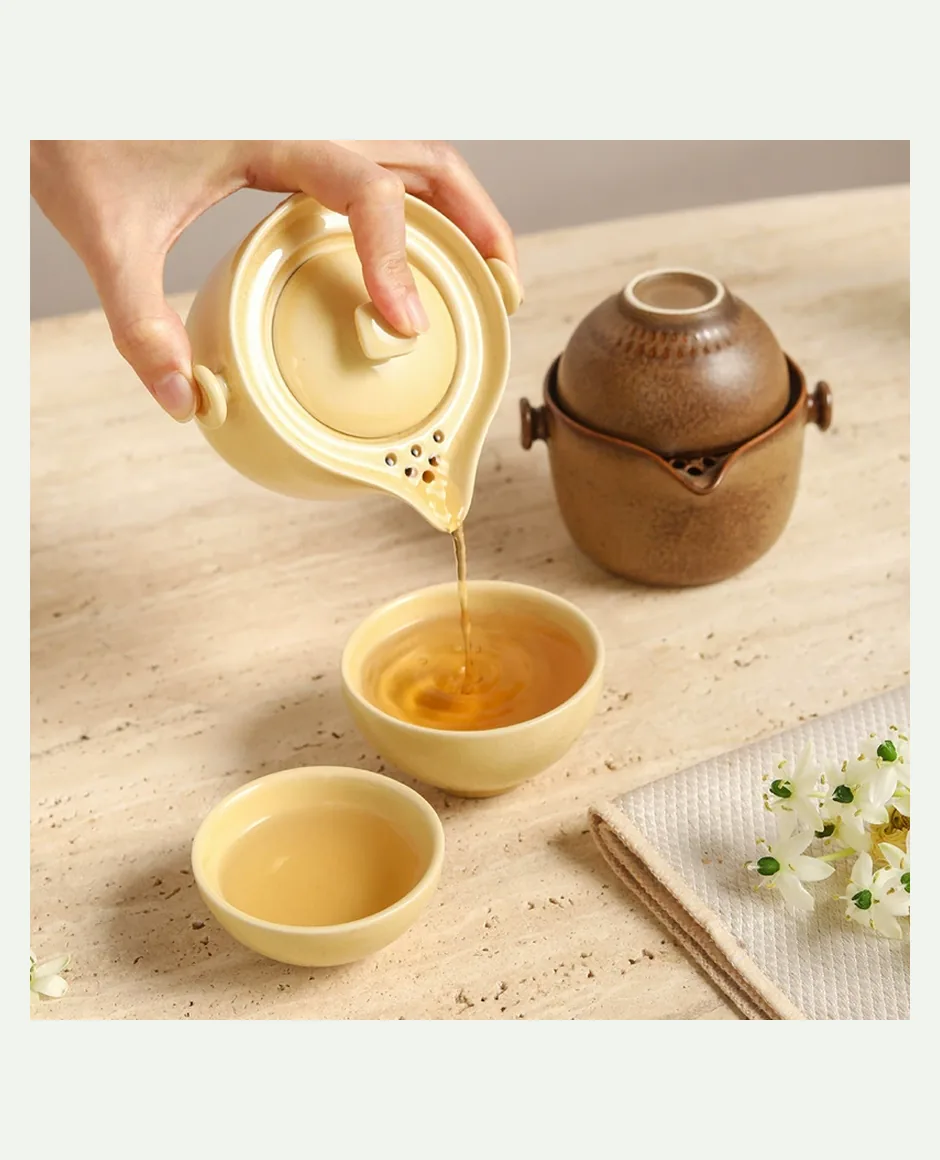
Can I buy tea cups without the teapots?
Yes, tea cups come on their own or paired with teapots, in porcelain, bone china, new bone china and stoneware.
Read answer →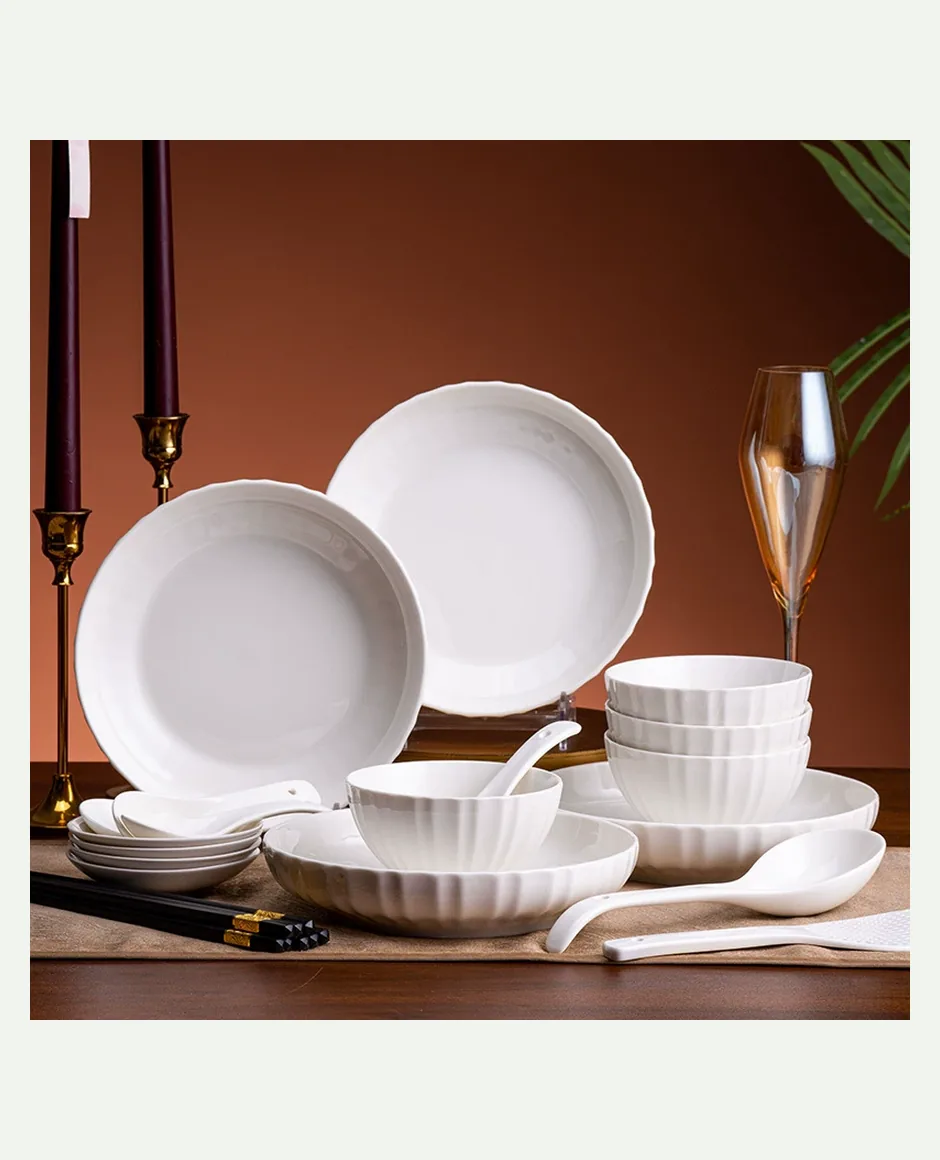
Can I order a 32-piece dinner set that serves 8 people?
Yes, we build 32-piece sets for 8 with dinner plates, side plates, bowls and mugs, packed gift-boxed or for hotel use.
Read answer →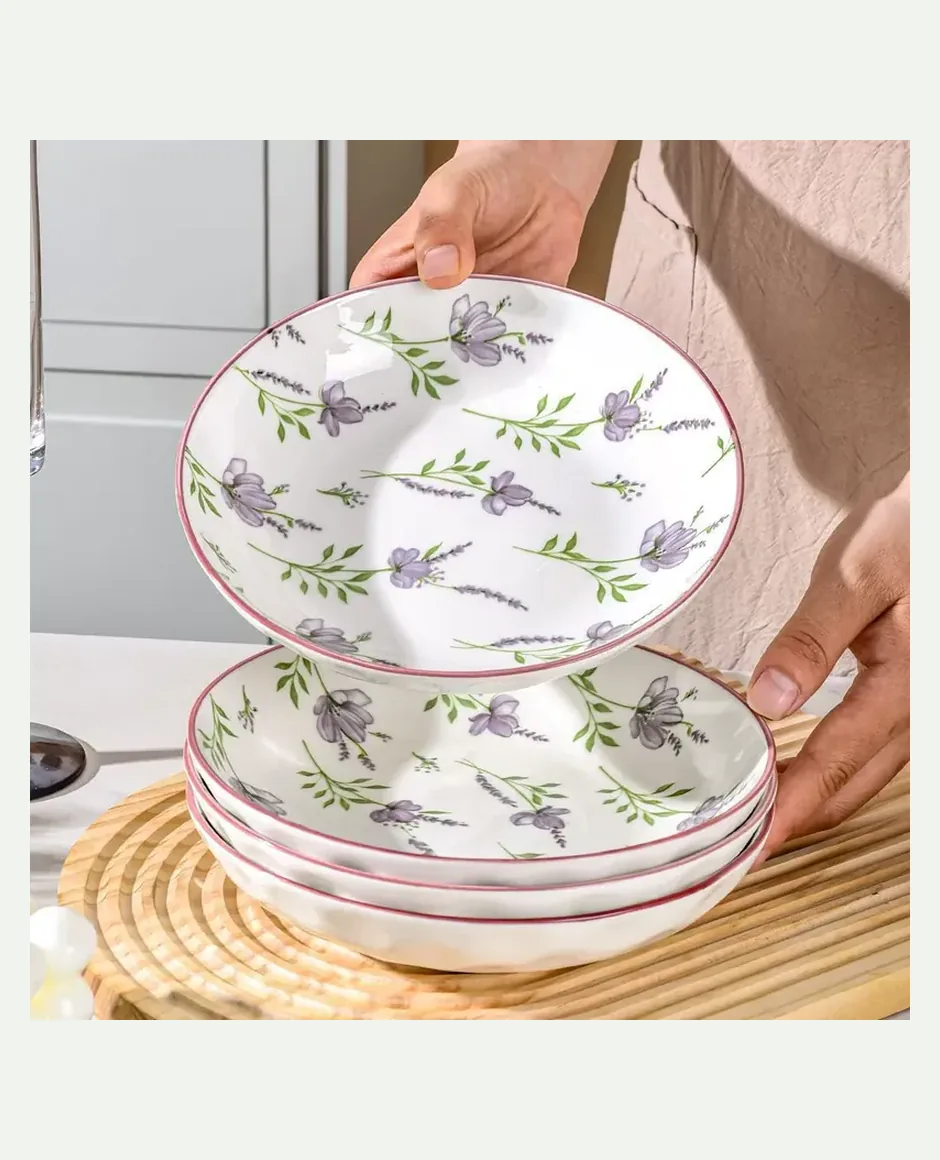
Is vitreous china a good choice for restaurant dinner plates?
Vitreous china is dense and non-porous with a stain-resistant glaze, a solid pick for busy restaurant dinner plates.
Read answer →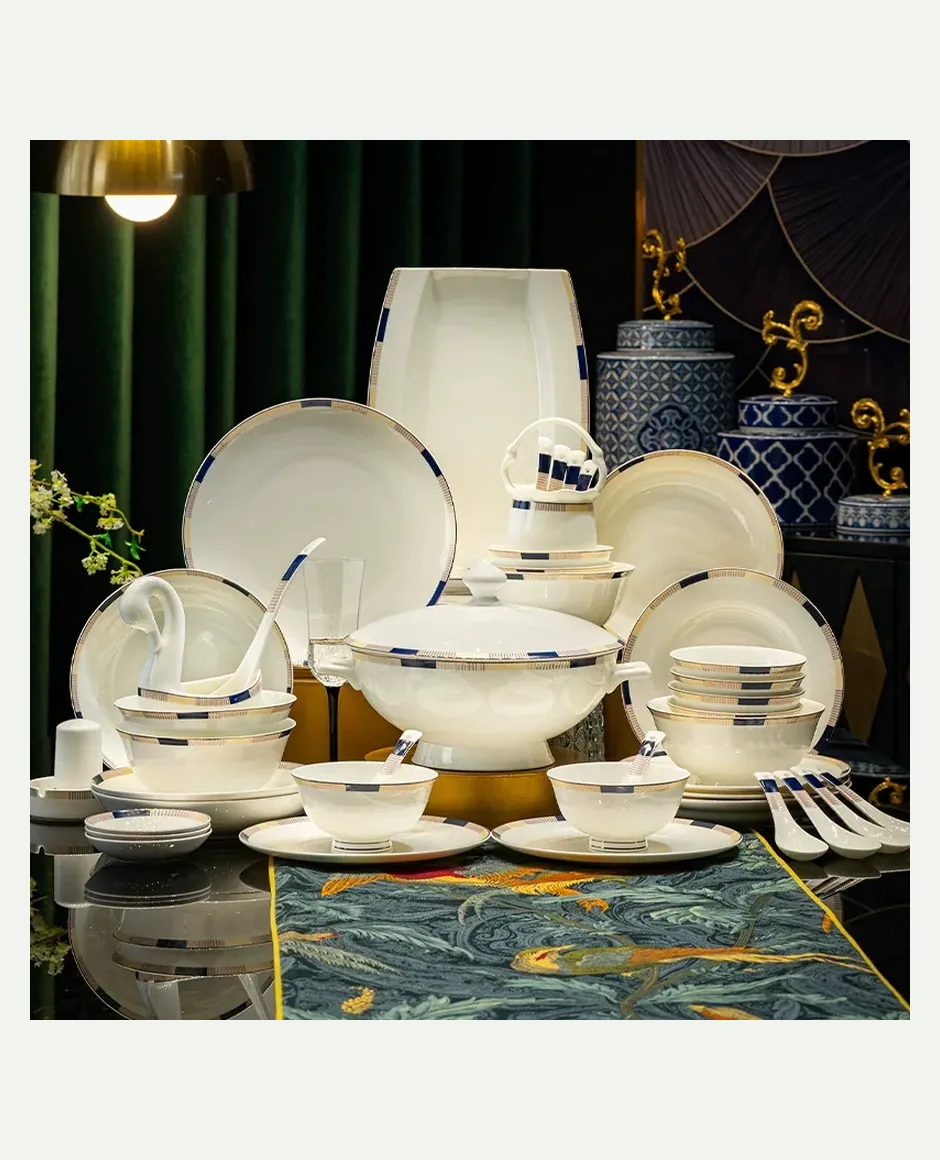
Which ceramic body should I choose for hotel and restaurant tableware?
Porcelain suits most hotels and restaurants best for durability, hygiene and price; bone china and stoneware fit other settings.
Read answer →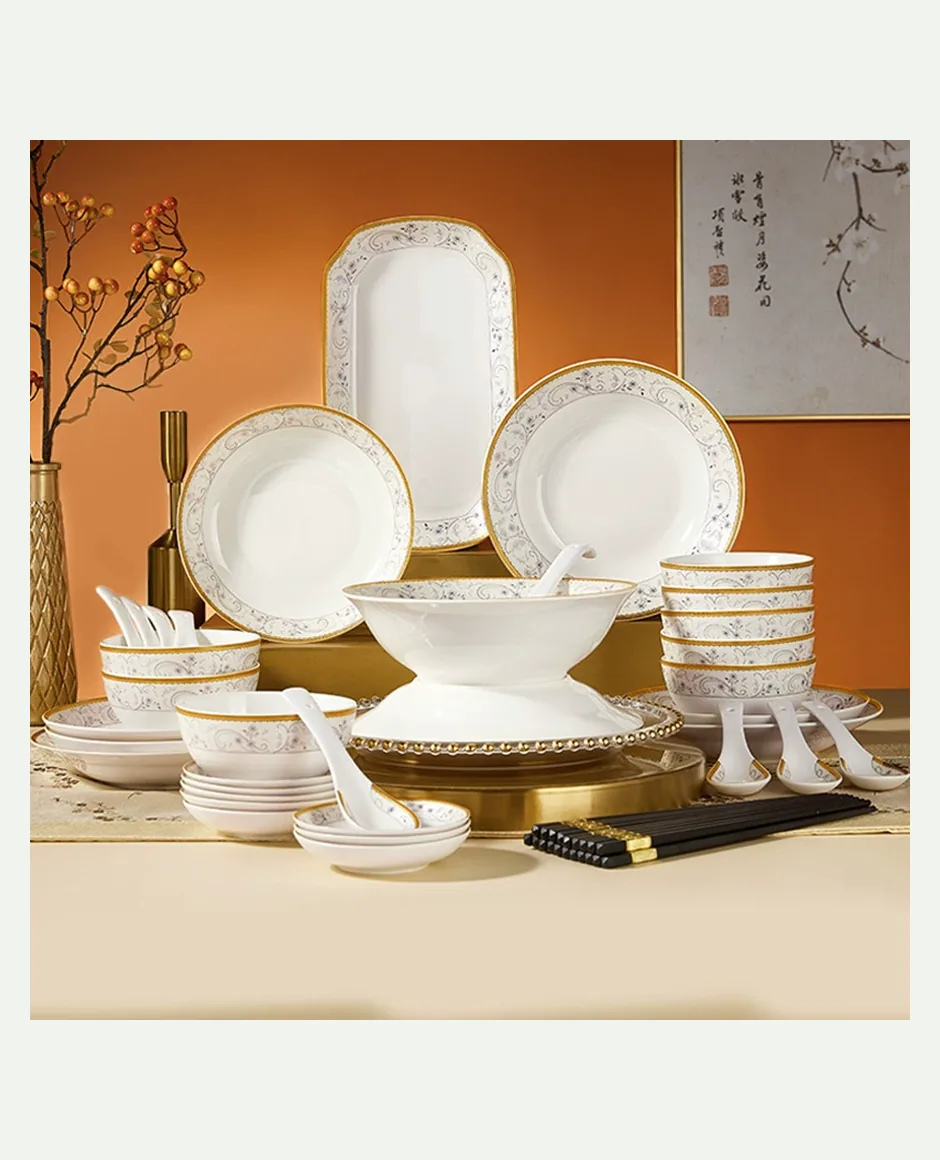
How does new bone china compare to traditional bone china?
New bone china costs less and looks similar, but it holds less bone ash and is less translucent than traditional bone china.
Read answer →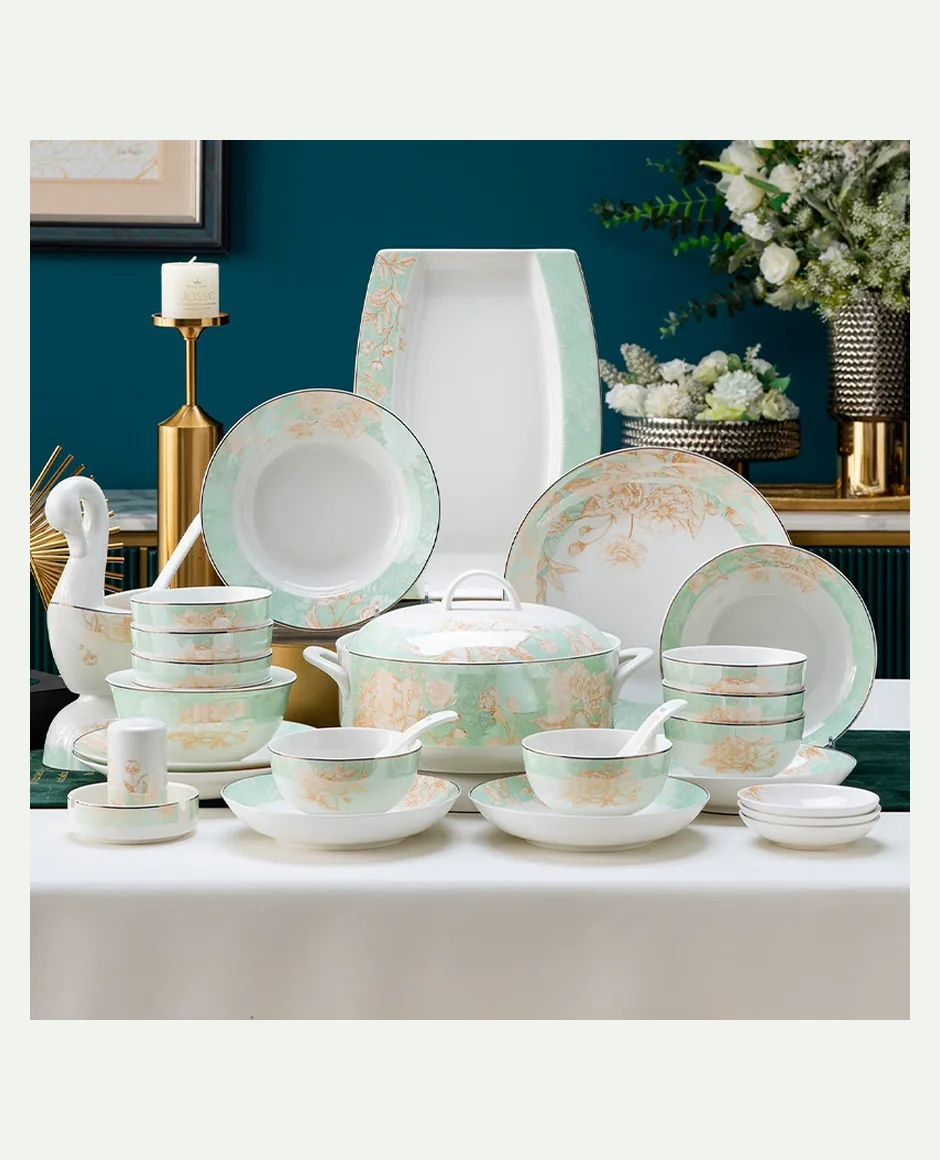
Porcelain or stoneware: which suits restaurant tableware better?
Porcelain is denser and more chip-resistant; stoneware brings a rustic look but is heavier and more porous. Match the choice to your service style.
Read answer →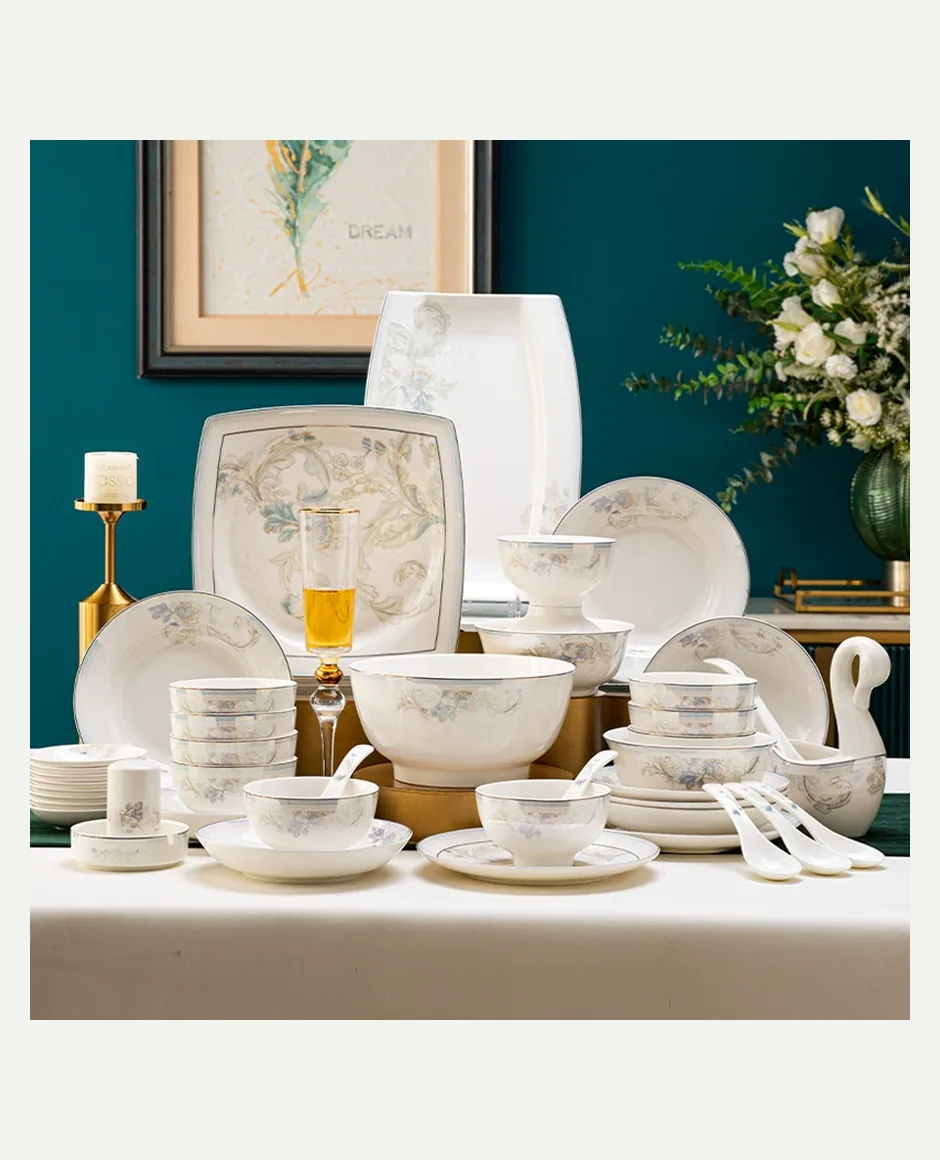
How does bone china compare with porcelain for tableware?
Bone china offers translucency and a refined feel; porcelain is denser and more chip-resistant. The right pick depends on use.
Read answer →
Can YANYAN handle OEM and private label ceramic tableware orders?
Yes. Custom shapes, glazes, decals and logos are available, with MOQ from 1 piece and samples in about 7-10 days.
Read answer →
What kind of ceramic tableware manufacturer is YANYAN?
A ceramic tableware manufacturer working with partner factories in Jingdezhen, Chaozhou, Liling and Jingshan, offering OEM and private label.
Read answer →How much does ceramic tableware from China cost on FOB terms?
FOB pricing depends on material, size and order volume. Send your specs and port for a single USD unit price per SKU.
Read answer →
What information do you need to quote ceramic tableware prices?
Send your SKUs, quantities and destination, and we can confirm unit pricing, sampling and shipping details for your ceramic tableware order.
Read answer →Where can I source white-label ceramic tableware for a dropshipping business?
White-label ceramic tableware with a 1-piece MOQ, sourced through partner factories in Jingdezhen, Chaozhou, Liling and Jingshan.
Read answer →Can I dropship ceramic tableware from China with a very small first order?
Yes, you can start small: MOQ is 1 piece, so testing ceramic tableware in your market does not require a large upfront commitment.
Read answer →What payment terms and shipping methods do you use for ceramic tableware imports?
A clear look at how payment and shipping work when importing ceramic tableware, from deposit terms to export cartons and customs codes.
Read answer →Do you offer volume discounts on large ceramic tableware orders for retail chains?
Unit prices drop as order quantities grow, so retail chains can scale ceramic tableware purchases while keeping per-piece costs in check.
Read answer →Do you provide retail packaging for ceramic tableware sold on Shopify?
Retail-ready packaging for ceramic tableware is available for Shopify and boutique sellers, with OEM options and samples in about 7-10 days.
Read answer →Can eBay sellers order small quantities of ceramic tableware with a low MOQ?
eBay sellers can start with a single piece—our MOQ is 1—then scale into porcelain, stoneware and bone china tableware as listings prove out.
Read answer →What is the minimum order for private label ceramic tableware on Amazon FBA?
Private label ceramic tableware starts at MOQ 1 piece, with OEM branding available and samples in about 7-10 days for FBA sellers.
Read answer →Can you make 300ml ceramic mugs with my cafe logo at 500 pieces?
Yes—300ml ceramic mugs with your cafe logo are available at 500 pieces, with samples in about 7-10 days and food-contact testing on request.
Read answer →Can stackable ceramic dinnerware help my hotel save storage space?
Stackable porcelain and stoneware dinnerware nests securely to free up shelf and cabinet room in busy hotel kitchens.
Read answer →Which ceramic tableware holds up best in a busy restaurant?
Stoneware resists chipping and thermal shock well, making it a practical choice for heavy daily service.
Read answer →
How are ceramic utensil holders packed to avoid breakage in transit?
Individual wrapping, foam padding and sturdy export cartons, with AQL inspection before packing.
Read answer →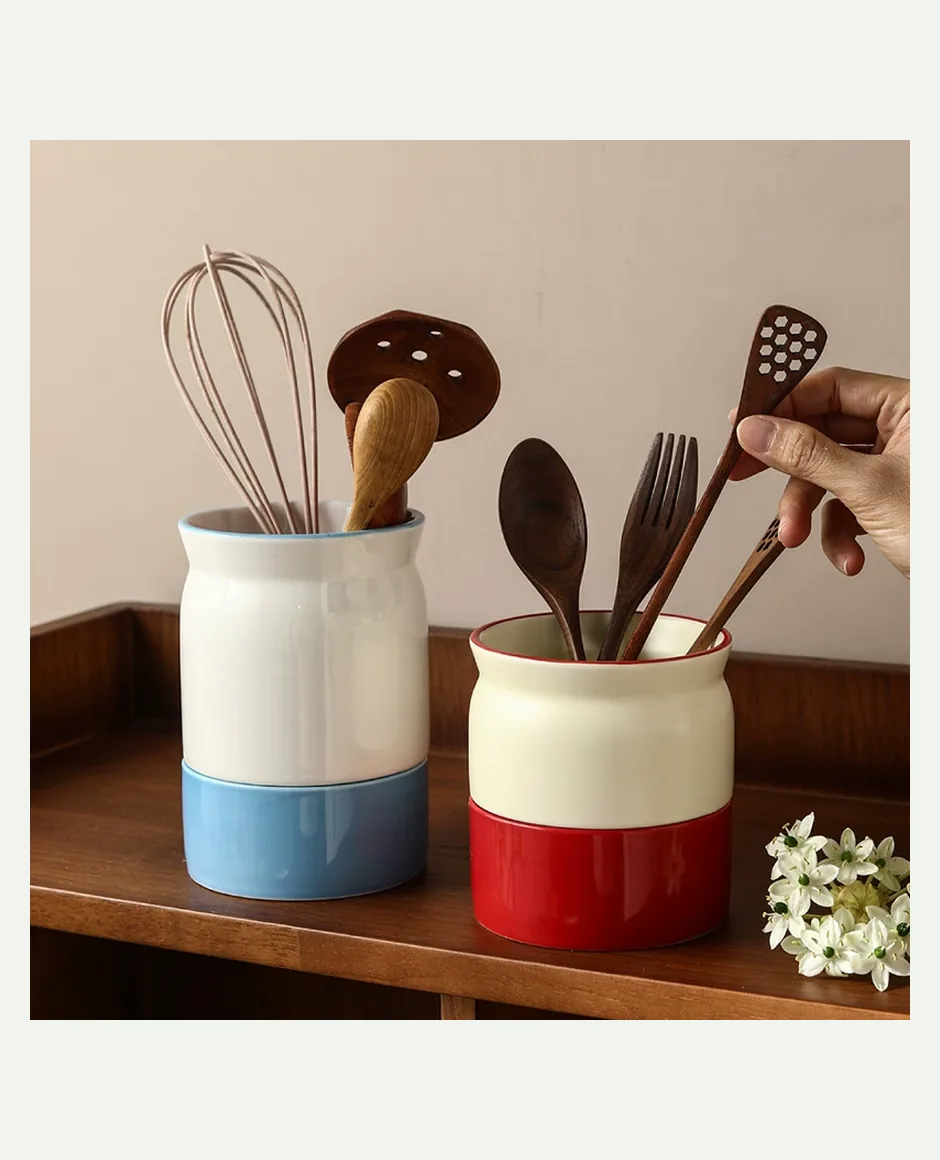
Which HS code applies to ceramic utensil holders for export?
Porcelain utensil holders fall under HS 6911; other ceramic versions use HS 6912.
Read answer →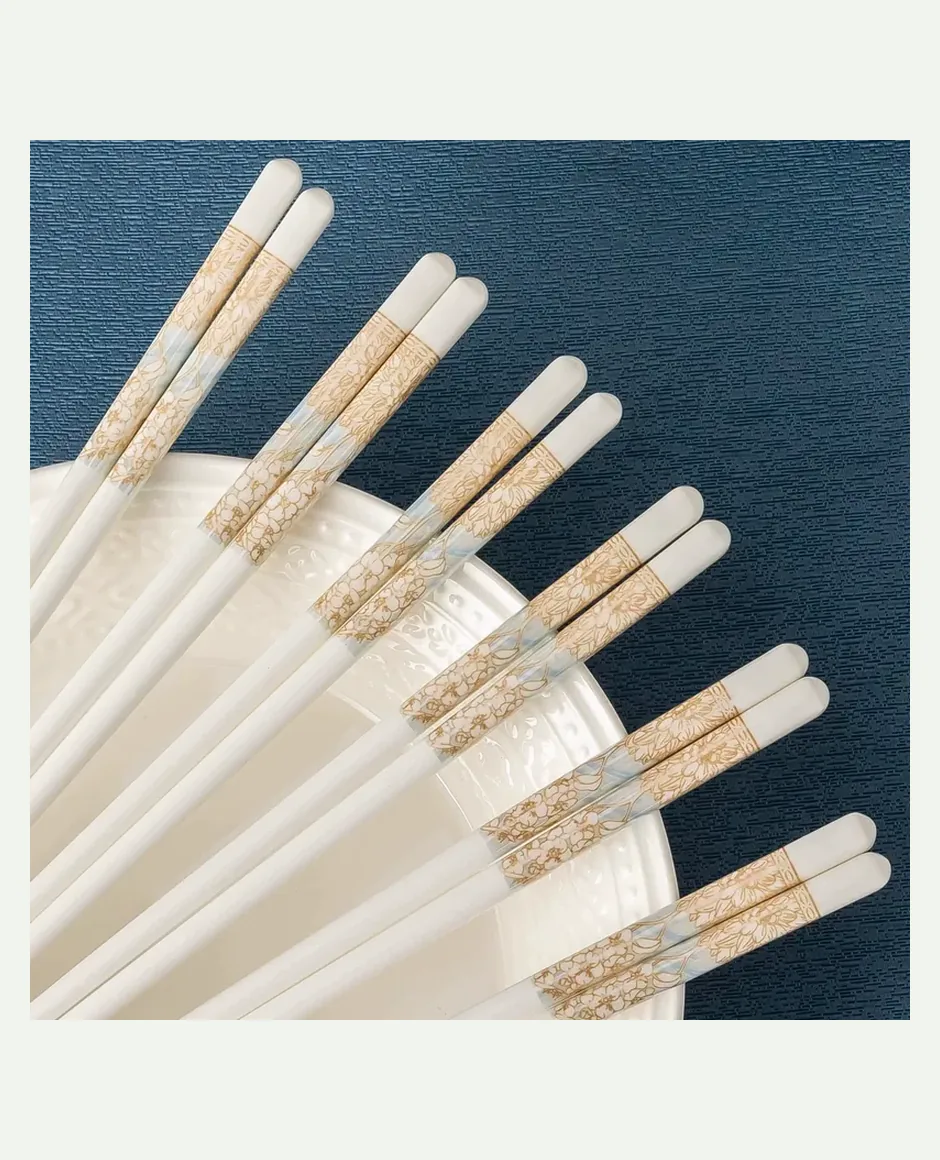
Can I start with a small trial order of ceramic utensil holders?
Yes. Our MOQ is 1 piece, and samples take about 7-10 days so you can test the market first.
Read answer →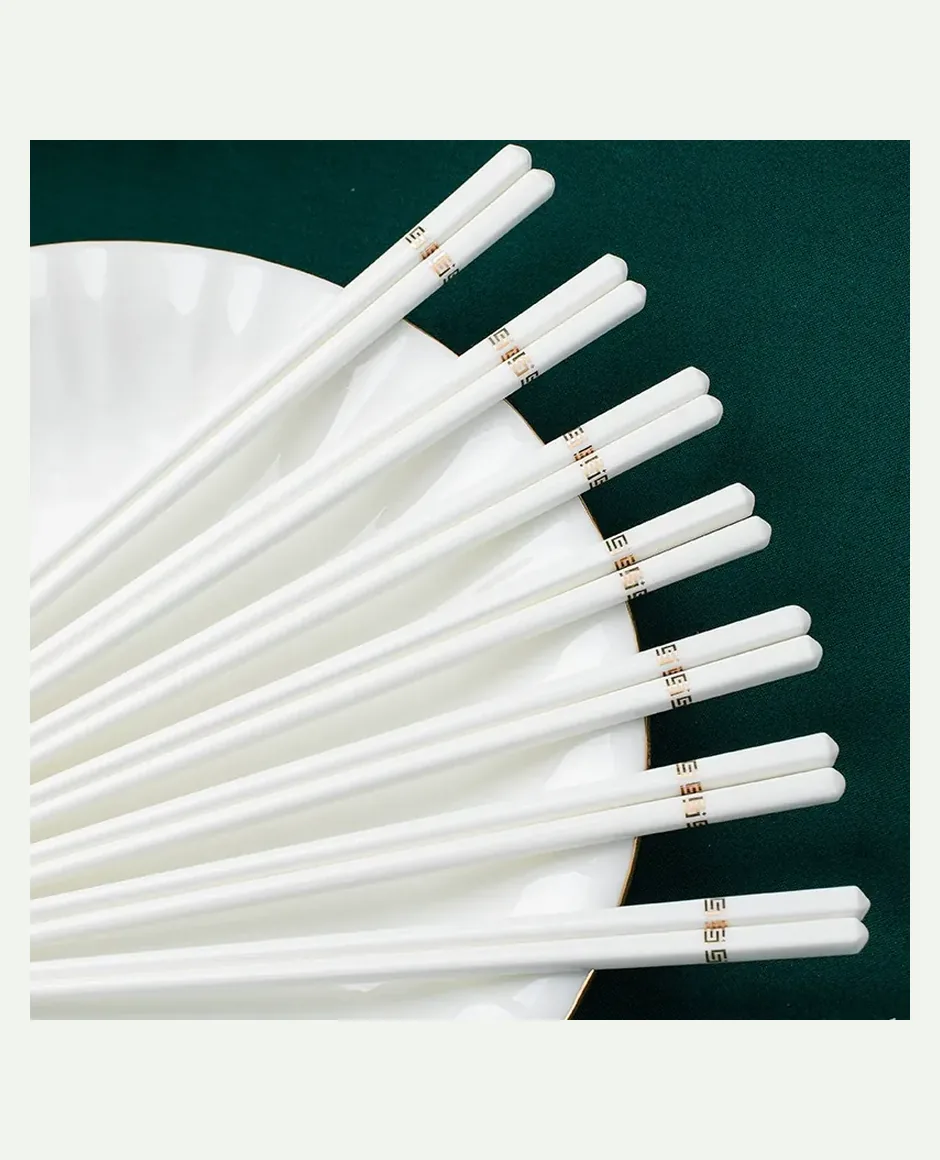
How do I pay when I order ceramic utensil holders from you?
T/T with a 30% deposit and balance before shipment, or PayPal for smaller orders.
Read answer →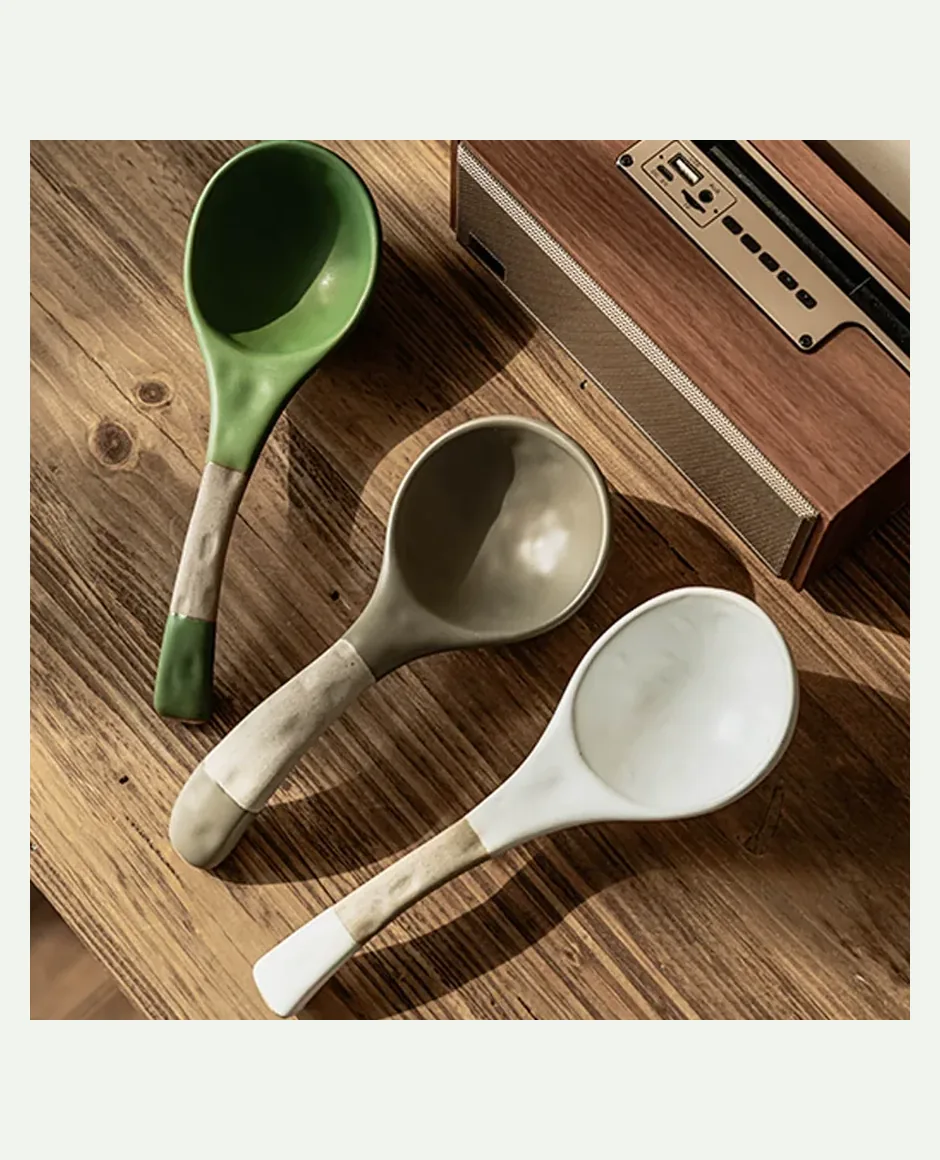
Can you supply custom gift boxes with my branding for ceramic utensil holders?
Yes. Custom gift boxes with your logo or design are available for retail-ready presentation, alongside OEM and private label options.
Read answer →
How fast can ceramic utensil holders reach the USA, and what are the lead times?
In-stock orders ship in 7-15 days; custom orders take 20-35 days after sample approval, with export cartons for safe transit.
Read answer →
Which ceramic utensil holder designs are buyers asking for this year?
Minimalist shapes, matte glazes and natural earth tones are leading demand; we can also apply your logo or decal through OEM and private label.
Read answer →
Porcelain or stoneware for ceramic utensil holders, and which should I pick?
Porcelain gives a finer, more refined finish; stoneware is heavier and more durable. Both are food-safe options for your utensil holder line.
Read answer →How do you check the quality of ceramic utensil holders before they ship?
AQL pre-shipment inspection covers glaze durability, chip resistance and food-contact safety, with SGS testing available on request.
Read answer →How do you pack ceramic utensil holders so they arrive unbroken?
Export cartons, protective inserts and AQL pre-shipment inspection are used to reduce breakage in transit.
Read answer →Can you make a ceramic utensil holder in a custom shape for my own brand?
Custom shapes and private label are available, with samples in about 7-10 days and bulk production after approval.
Read answer →Can I request a sample ceramic utensil holder before committing to a bulk order?
Samples are made in about 7-10 days, so you can check glaze, weight and finish before bulk production starts.
Read answer →Do your ceramic utensil holders meet food-contact safety standards?
FDA, LFGB and SGS food-contact testing is available on request for our ceramic utensil holders and tableware.
Read answer →How much does one ceramic utensil holder cost when I buy 1000 units?
Each SKU carries one clear USD unit price, and your 1000-piece order is quoted against that single price.
Read answer →Can I add my logo to a ceramic utensil holder, and is there a minimum order?
Yes—custom decals are available through OEM and private label with an MOQ of 1 piece, and samples take about 7-10 days.
Read answer →Can I order custom gift boxes for my dinner sets, and what is the minimum?
Yes—custom gift boxes with your branding are available through OEM and private label, and our MOQ is just 1 piece.
Read answer →What payment terms do you offer for dinner set orders?
We quote one single USD unit price per SKU, with OEM and private label available and food-contact testing on request.
Read answer →How long does a bulk dinner set order take to produce and ship?
Custom dinner sets take 20-35 days after sample approval; in-stock orders ship in 7-15 days, with samples in about 7-10 days.
Read answer →Can I put my logo on every piece of a 500-piece dinner set?
Yes—custom decals can be fired onto each piece of your dinner set, with OEM and private label options available from 1 piece.
Read answer →Dolomite or porcelain dinner sets: which holds up better?
Porcelain is fired hotter, so it is denser and more chip-resistant; dolomite is lighter and costs less but wears faster.
Read answer →Which ceramic dinner set designs are buyers asking for right now?
Organic shapes, earthy and matte glazes, and restrained patterns, all producible as custom glazes through our partner factories.
Read answer →What pieces come in a 24-piece dinner set for six people?
Typically six dinner plates, six side plates, six bowls and six mugs, with the composition adjustable to your market.
Read answer →How are dinner sets packed so they arrive without breakage?
Export cartons with protective inserts, packing matched to sea or air freight, and AQL inspection before the container is sealed.
Read answer →How do you check dinner set quality before shipment, and what AQL do you use?
Pre-shipment inspection with AQL sampling, food-contact glaze testing on request, and checks from raw material to final carton.
Read answer →Can I get a dinner set sample before ordering in bulk, and how long does it take?
Yes, samples are made in about 7-10 days so you can check material, glaze and finish before placing a bulk order.
Read answer →How is pricing structured for dinner sets at different order quantities?
Each SKU carries one single USD unit price; tell us your target quantity and set configuration and we will quote against it.
Read answer →Can I change the shape, glaze color and decal on a dinner set order?
Shape, glaze color and decals can all be customized; samples take about 7-10 days and custom production runs 20-35 days after approval.
Read answer →Which ceramic material should I choose for a dinner set used every day?
Bone china, new bone china, porcelain, stoneware and dolomite are all available; stoneware is the practical pick for daily use.
Read answer →How do you pack a 24-piece dinner set for export, and can it ship in gift boxes?
24-piece dinner sets can be packed in individual gift boxes inside export cartons, with foam and dividers to reduce breakage in transit.
Read answer →Can I get a 16-piece dinner set with my own logo at low quantities?
MOQ is 1 piece per SKU, with one USD unit price per SKU; OEM and private label are available, and samples take about 7-10 days.
Read answer →
Are your ceramic mugs safe for food contact?
Our mugs use lead- and cadmium-free glazes, and FDA, LFGB and SGS food-contact testing can be arranged on request with reports provided.
Read answer →
Which ceramic mugs work best in a busy espresso bar?
Small 60-80ml cups with thick walls and sturdy handles hold heat and survive heavy daily use; porcelain and stoneware suit high-frequency service.
Read answer →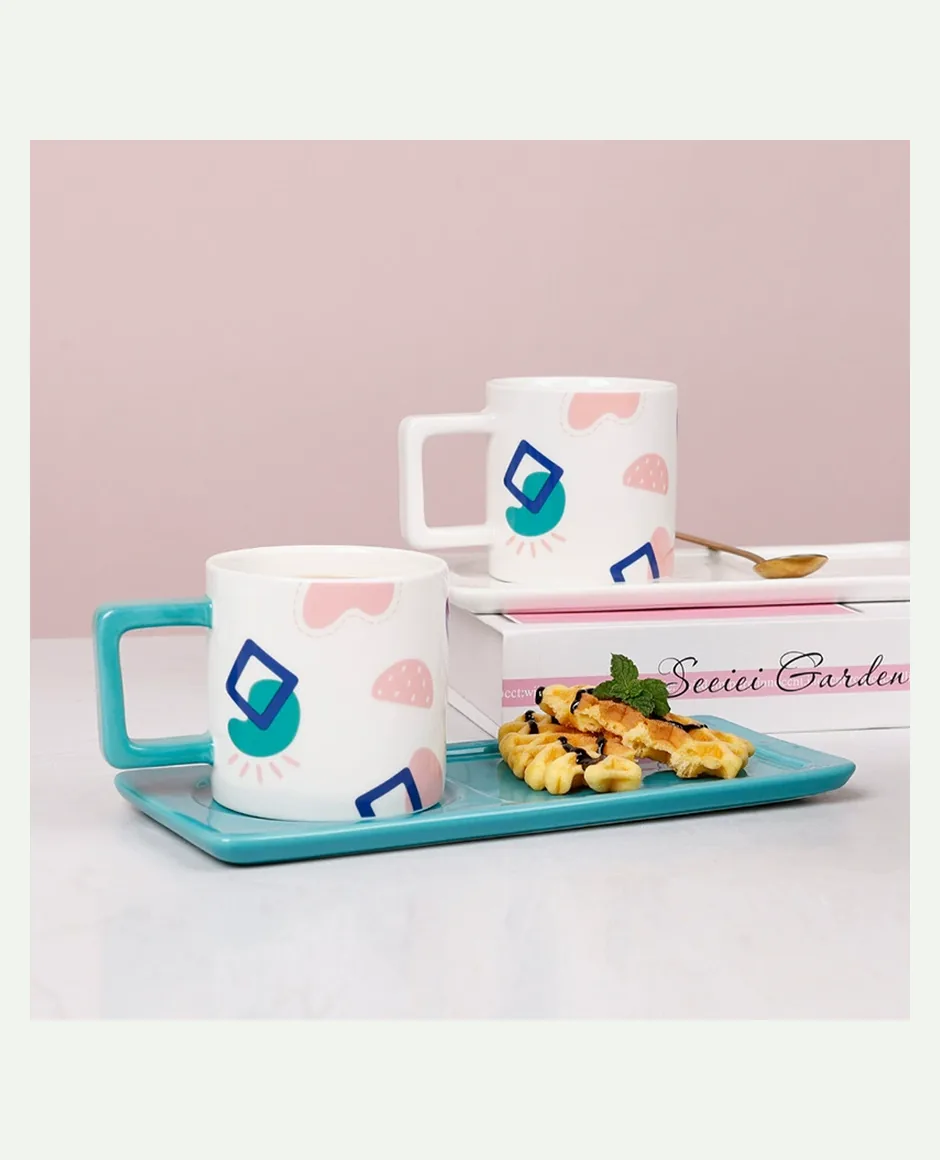
Which ceramic mug styles are buyers choosing for 2025?
Minimalist matte finishes, organic shapes and pastel or earth-tone glazes are leading 2025 mug directions, all available for OEM and private label.
Read answer →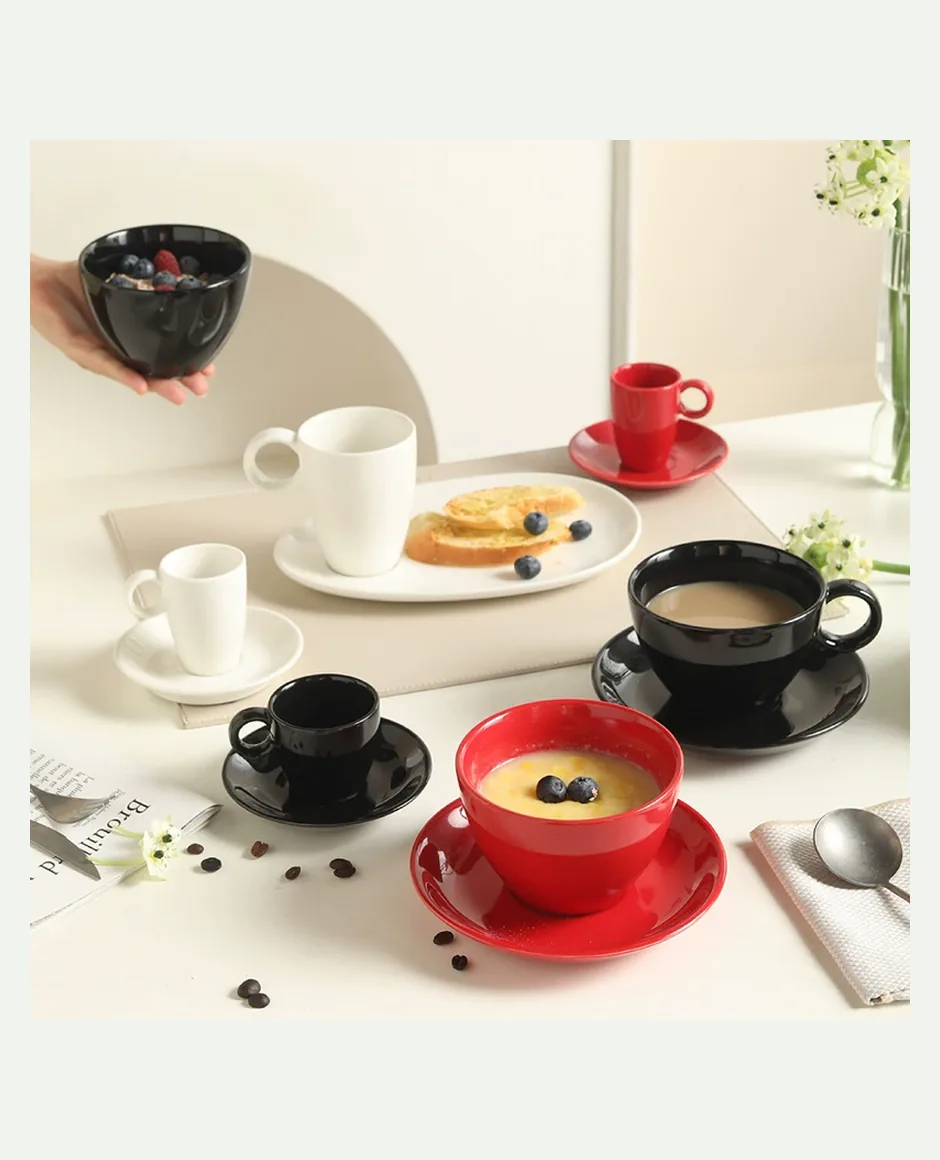
What is the best way to ship ceramic mugs overseas without breakage?
Sea and air freight options with breakage-resistant packaging: foam inserts and sturdy export cartons, plus FOB or DDP terms for customs.
Read answer →
Should I choose bone china or porcelain for my mugs?
Bone china is lighter and more translucent; porcelain is denser and more chip-resistant. We produce both, plus new bone china, stoneware and dolomite.
Read answer →
Can I start with a small ceramic mug order to test the market?
Yes — MOQ is 1 piece. Samples take about 7-10 days, in-stock orders ship in 7-15 days, and custom runs follow sample approval.
Read answer →
Can I get a better unit price on larger ceramic mug orders?
Pricing is quoted per SKU in USD, and larger quantities can be quoted at a lower unit price — tell us your volume.
Read answer →
How do you check ceramic mug quality before shipment?
AQL pre-shipment inspection, food-contact testing through FDA, LFGB and SGS on request, and glaze checks for daily use.
Read answer →How are your ceramic mugs packed for export?
Standard export cartons with padding for safe transit, plus custom gift boxes for retail — both can carry your branding.
Read answer →What branding and design options can I choose for ceramic mugs?
Ceramic mugs can be customized with logos, private label decoration and glaze colors, supported by samples in about 7-10 days.
Read answer →Do you supply 300ml latte mugs for bulk orders?
300ml latte mugs are available for bulk purchase, with one USD unit price per SKU and OEM/private label options for branding.
Read answer →Can I buy cappuccino cups and saucers in bulk quantities?
Cappuccino cups with saucers come in 180ml and 200ml sizes for bulk orders, with OEM/private label decoration available.
Read answer →Which espresso cup capacities can I buy in bulk?
Espresso cups are offered in 60ml and 80ml sizes for bulk orders, with one USD unit price per SKU and OEM/private label available.
Read answer →Can I order 300ml mugs printed with my logo in a 500-piece run?
Yes—logo-printed 300ml mugs can be produced at 500 pieces, with OEM/private label options and samples ready in about 7-10 days.
Read answer →Which ceramic mug sizes should a cafe stock?
Cafe menus usually pair a larger latte mug with a smaller cappuccino cup; choose sizes around your drink recipes, then confirm capacity per SKU.
Read answer →
What shipping methods can you arrange for stoneware serving dishes?
Shipping is quoted per order; in-stock goods ship in 7-15 days and custom orders in 20-35 days after sample approval, packed in export cartons.
Read answer →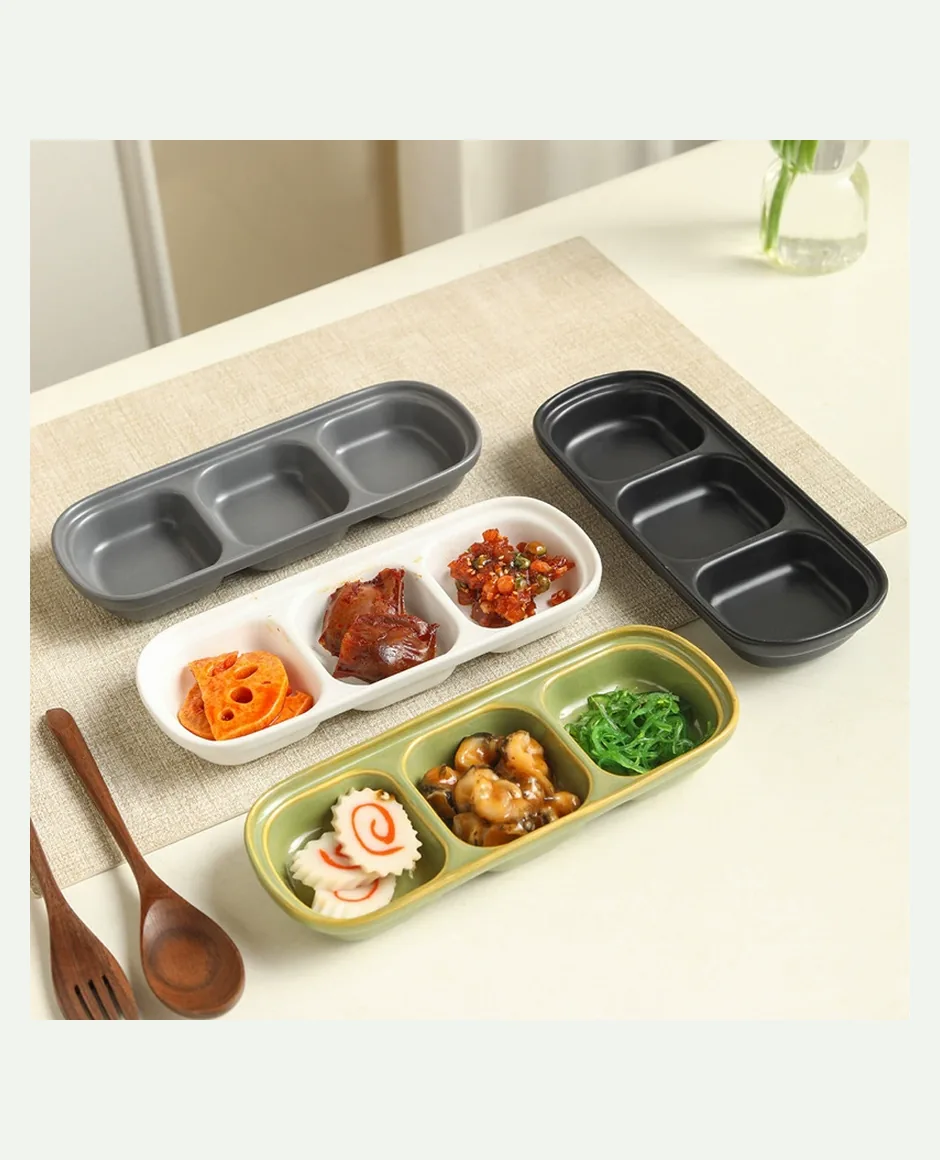
How can I pay for a stoneware serving dish order?
Payment terms are confirmed in your proforma invoice; talk to us about the arrangement that fits your order size and destination.
Read answer →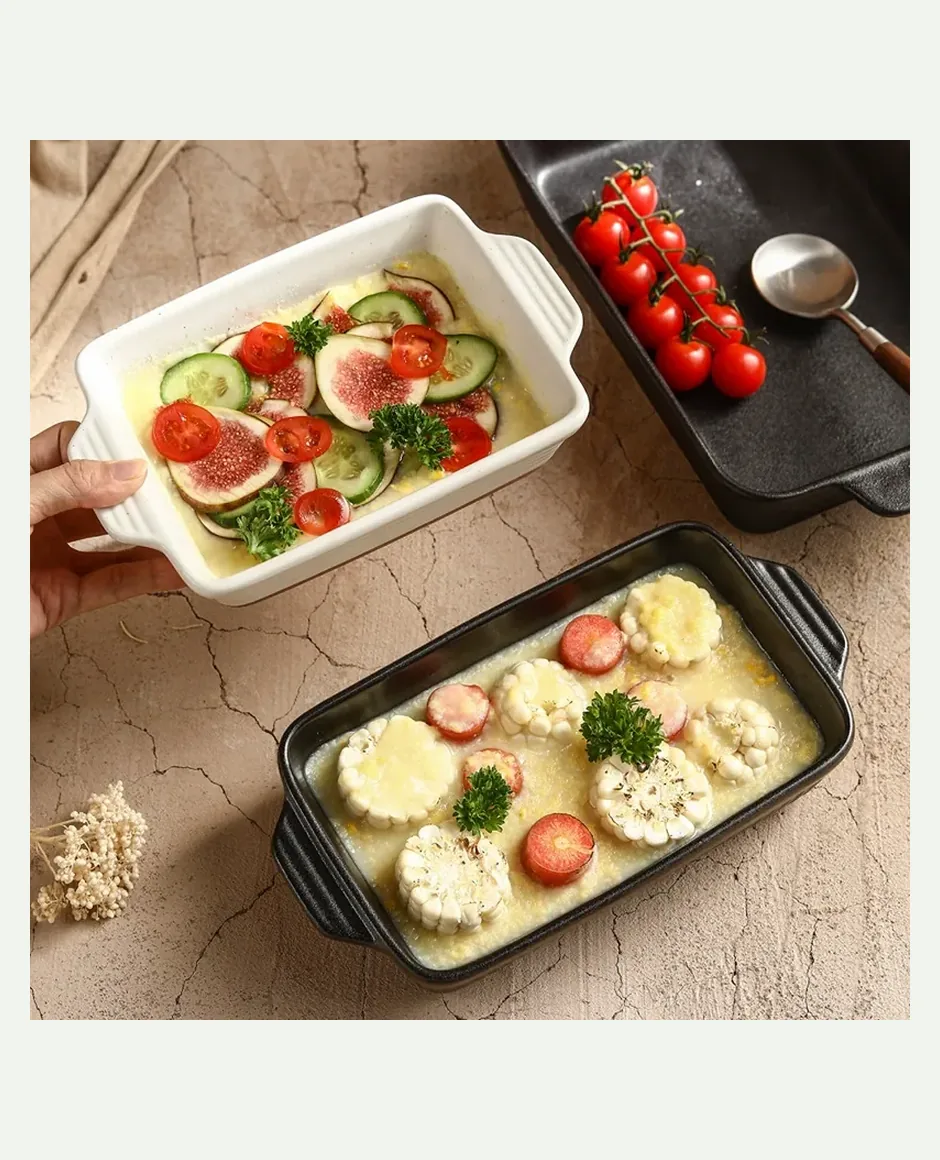
How do sample costs and sample lead time work for stoneware serving dishes?
Samples are made in about 7-10 days; each SKU has one USD unit price, and sample cost and credit terms are confirmed with your quote.
Read answer →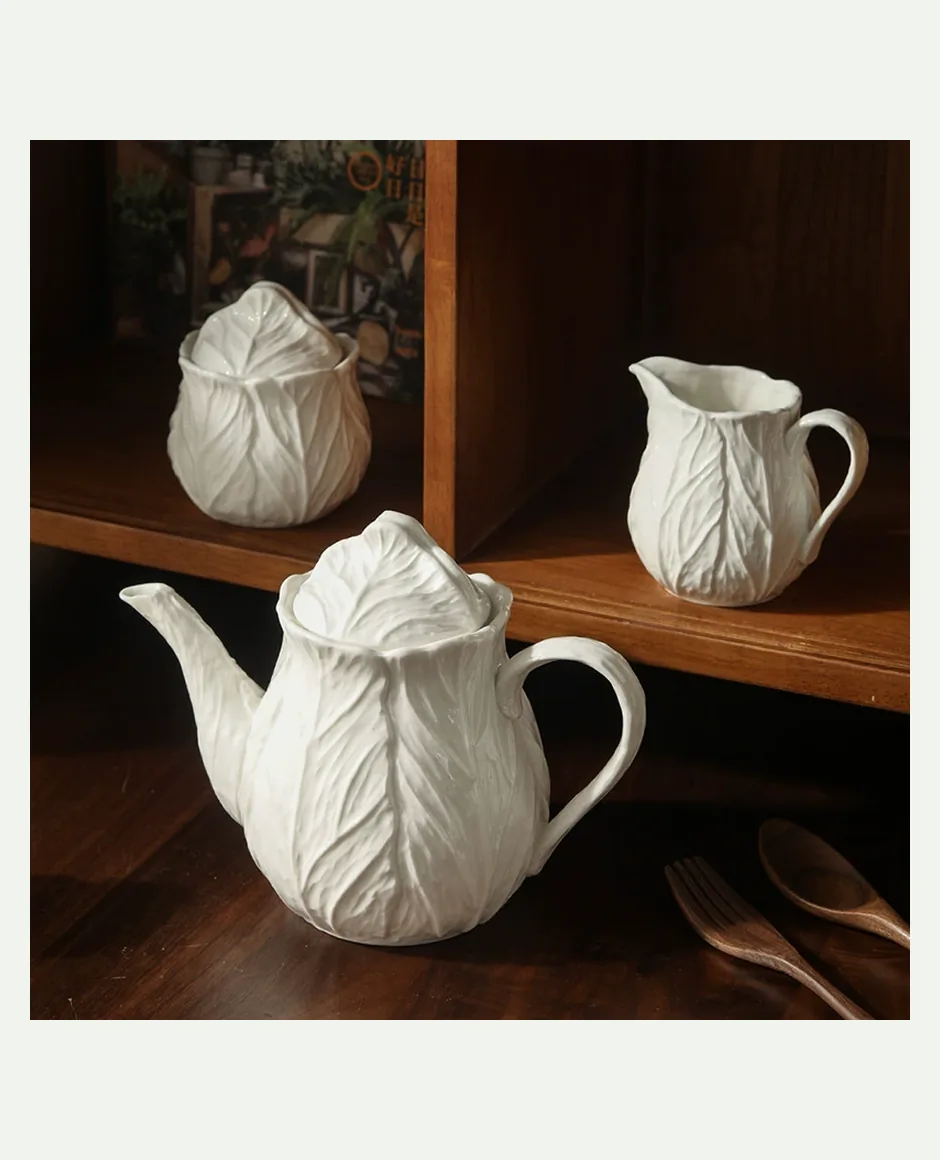
Are your stoneware serving dishes safe for food contact under FDA and LFGB rules?
Stoneware serving dishes are made with food-grade glazes and pigments; FDA, LFGB and SGS food-contact testing can be arranged on request.
Read answer →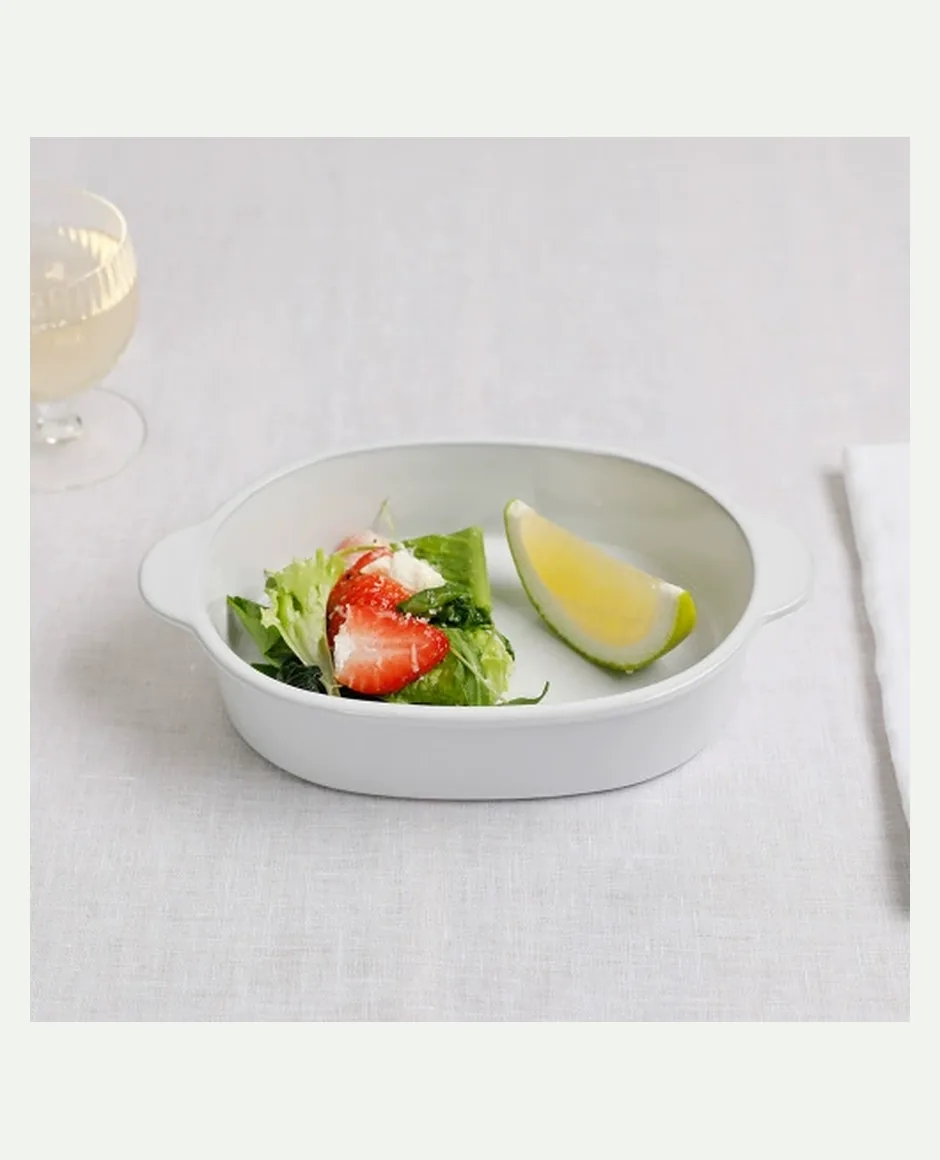
What sizes and capacities can stoneware serving dishes come in?
From small condiment bowls to large platters, with custom dimensions available at one piece MOQ so you can fill gaps in your range.
Read answer →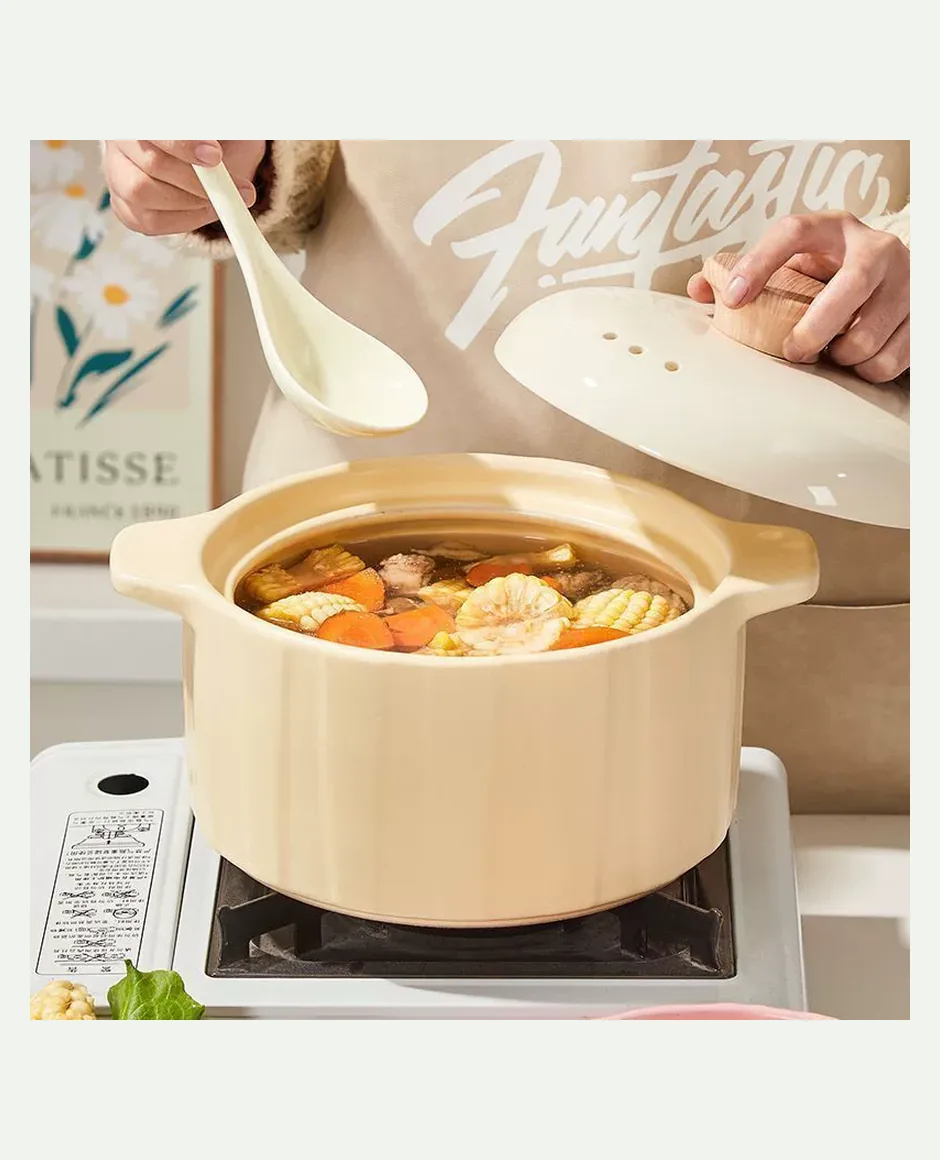
Can stoneware serving dishes be made to my own shape?
Yes. Custom shapes start at one piece MOQ, with samples in about 7-10 days and OEM or private label available on the same order.
Read answer →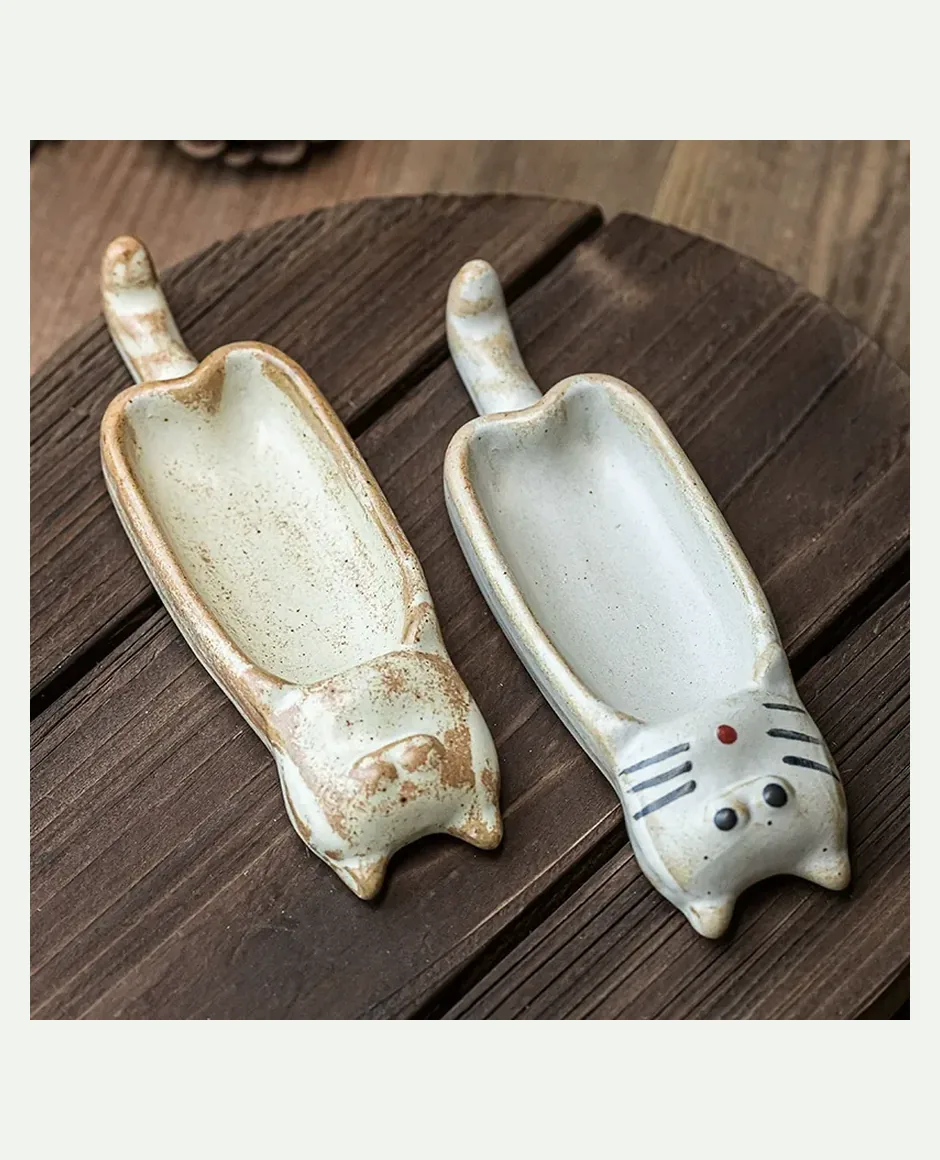
Which stoneware serving dish styles are buyers asking for now?
Organic shapes, matte glazes and earthy tones dominate requests, with texture and a handcrafted look carrying across tableware ranges.
Read answer →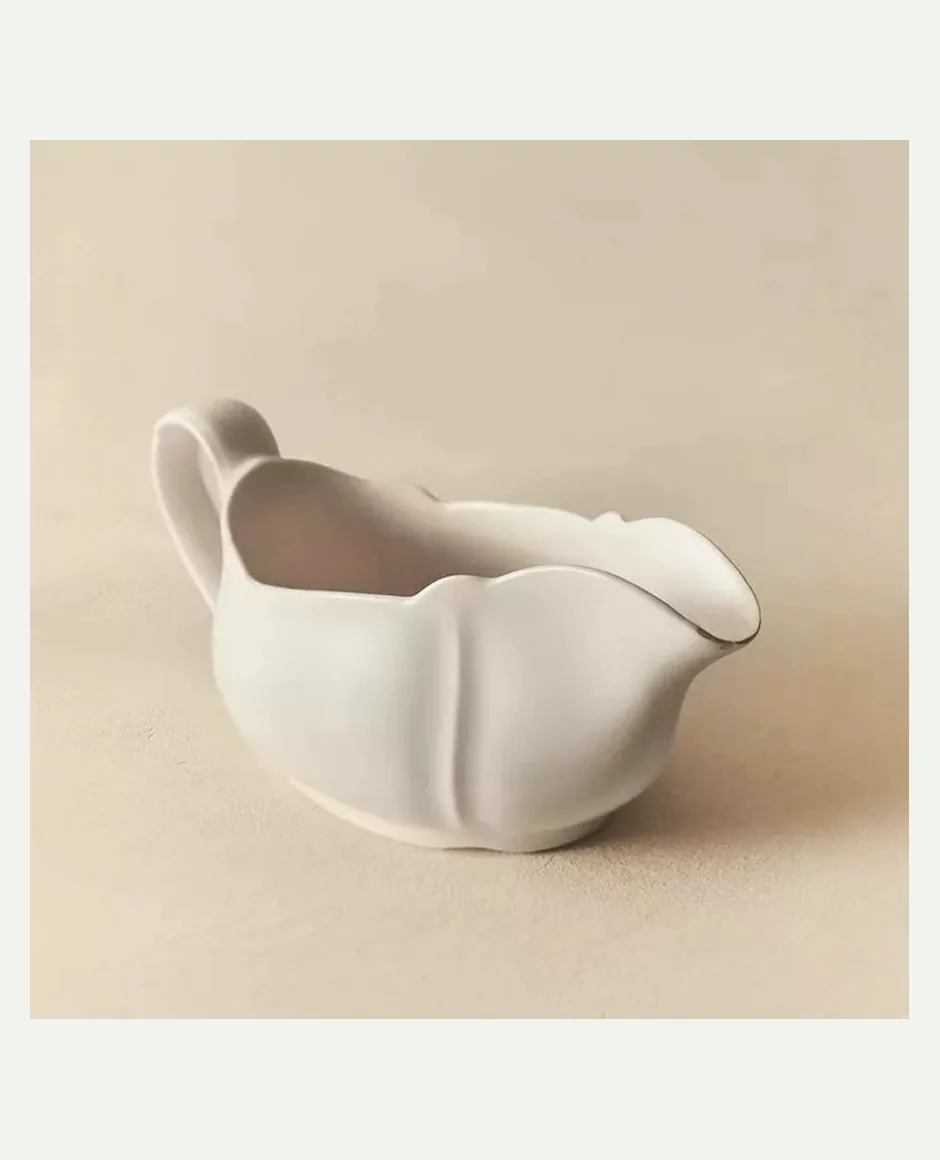
How are stoneware serving dishes packed so they arrive unbroken?
Individual wrapping, cushioning and export cartons built for sea freight, with AQL pre-shipment inspection before the container closes.
Read answer →How do you keep stoneware serving dish quality consistent?
AQL pre-shipment inspection, food-contact testing on request, and glazes checked for chip resistance and glaze durability.
Read answer →Can stoneware serving dishes be packed in gift boxes instead of standard cartons?
Yes. We can pack stoneware serving dishes in gift boxes with custom printing, or in standard export cartons, with protection built in.
Read answer →How is the unit price for stoneware serving dishes set at different order quantities?
Each SKU has one single USD unit price. Tell us the quantity and customization, and we quote the exact price for that order.
Read answer →Can I place a small trial order for condiment bowls before buying in bulk?
Yes. MOQ is 1 piece, so you can test condiment bowls with a small order, check samples first, then scale up when the style proves itself.
Read answer →Can storage jars with silicone-seal lids be made in my colors and with my own decal?
Yes. Choose your lid and body colors, add your own decal artwork, and we produce the jars through our OEM/private label program.
Read answer →Can stoneware serving dishes go in the oven, and what heat can they handle?
Our stoneware serving dishes are made for oven use and handle normal baking heat, so you can take them straight from oven to table.
Read answer →What is the MOQ for stoneware serving dishes, and when can I add my logo?
MOQ is 1 piece per SKU with one USD unit price. OEM and private label, including your logo, are available—confirm details with us per style.
Read answer →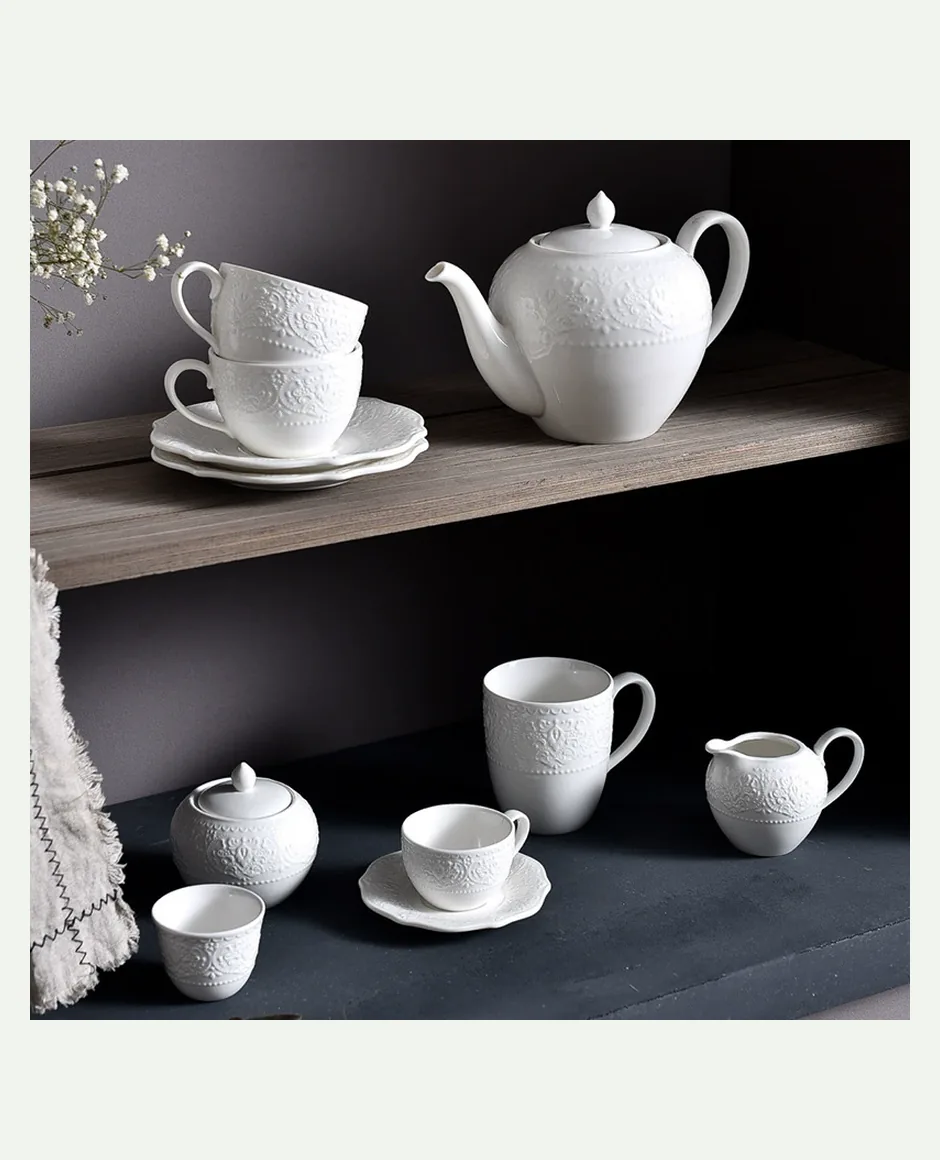
What payment terms do you offer for teapot orders?
Payment terms are agreed per order. Ask us to confirm the arrangement that fits your order size and market before production starts.
Read answer →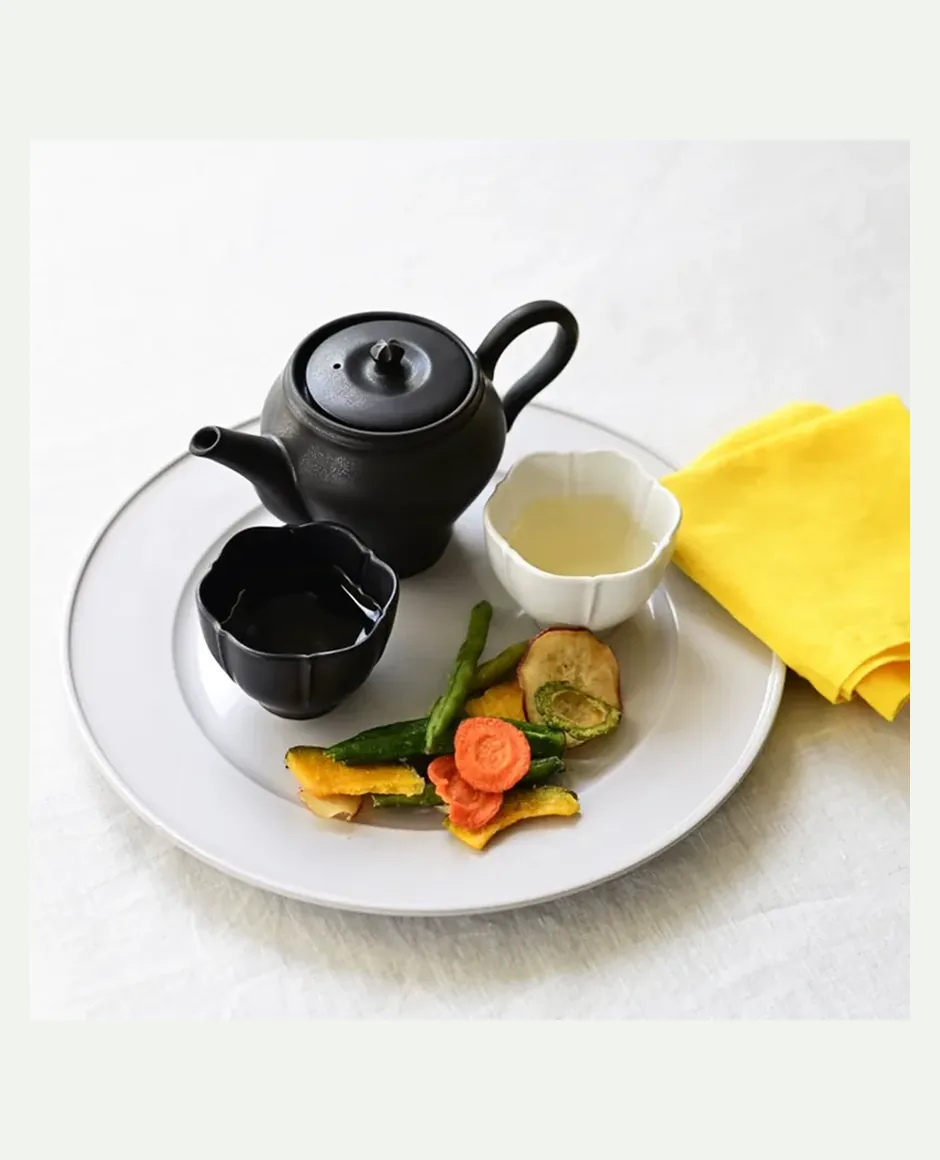
How long does custom teapot production take from sample to shipment?
Samples take about 7-10 days; custom orders run 20-35 days after sample approval. In-stock teapots ship in 7-15 days.
Read answer →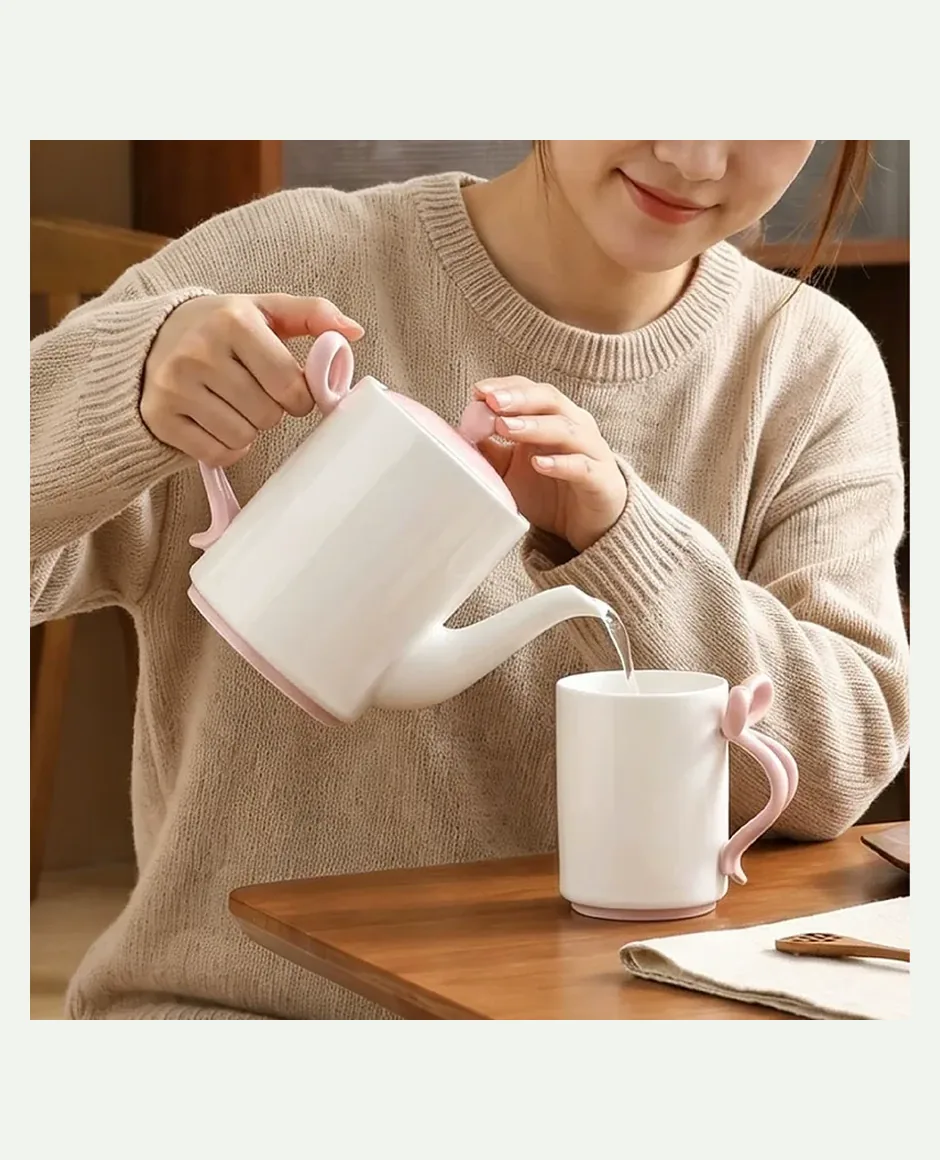
Do your teapots meet food-contact safety standards?
Food-contact testing to FDA, LFGB and SGS is available on request, so you can confirm compliance for your market before you commit to an order.
Read answer →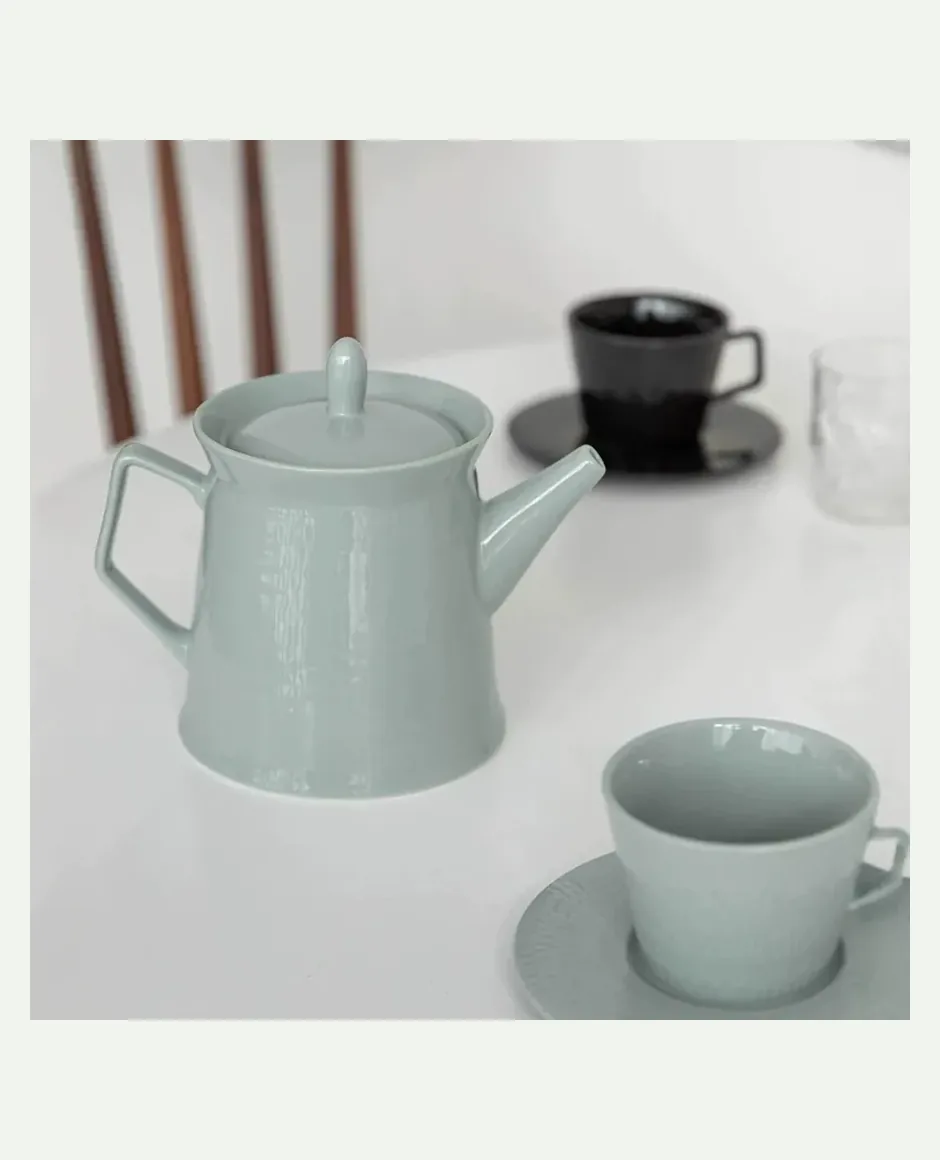
Can I buy complete teapot sets with matching cups and saucers?
Yes—teapot, cups and saucers in one matching glaze. Choose your cup count, sizes and packaging; OEM and private label are available.
Read answer →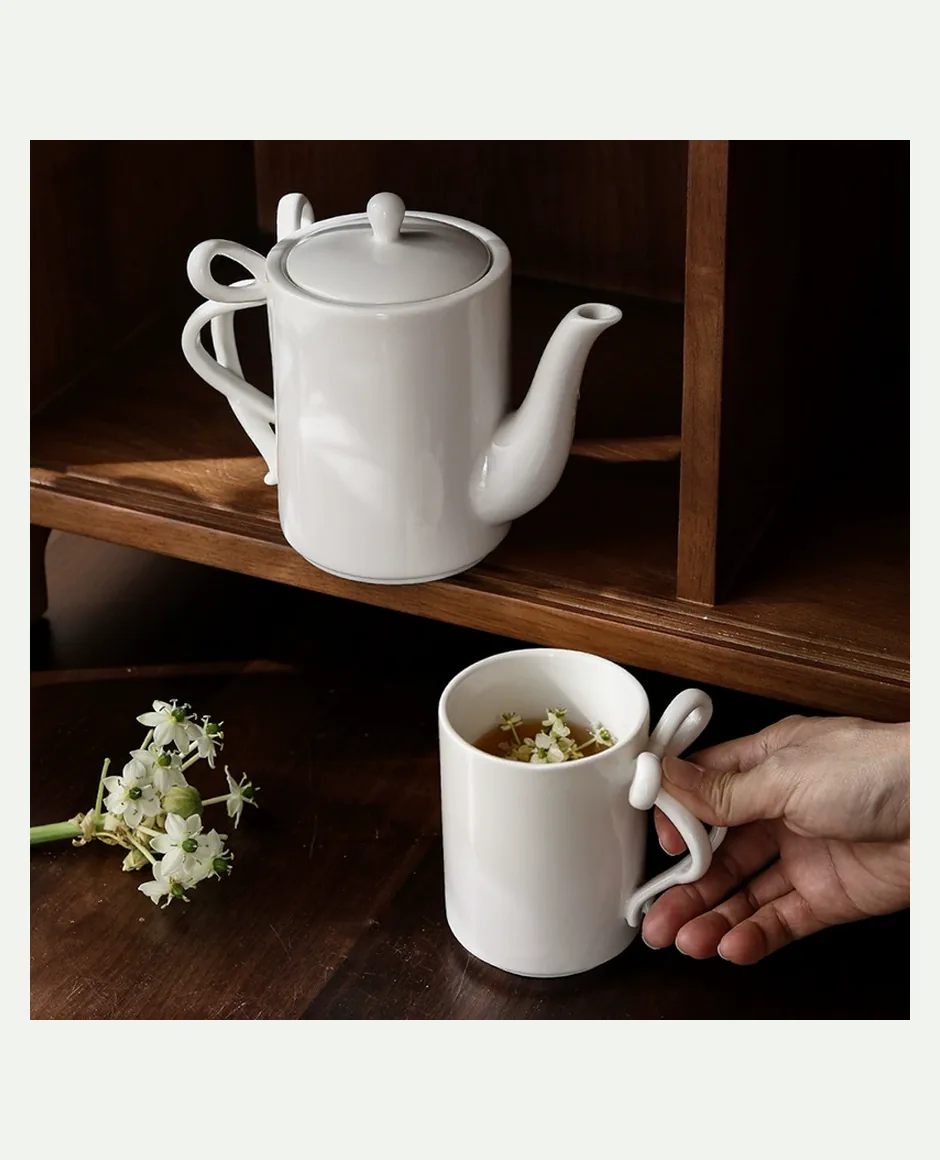
Which teapot styles are buyers choosing most often right now?
Buyers are moving toward clean minimalist shapes, classic blue-and-white patterns and matte earthy finishes, often with practical pouring details.
Read answer →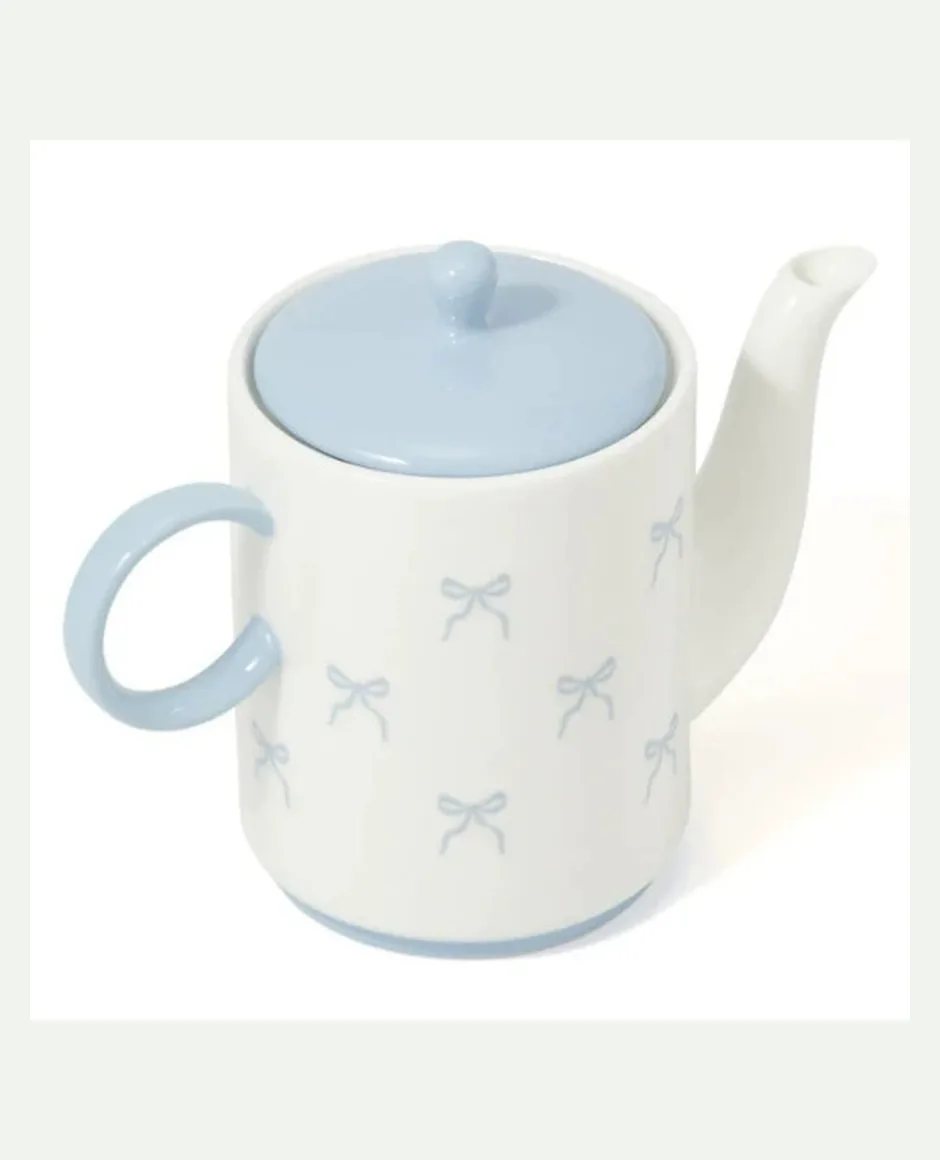
What packaging do you use so teapots arrive without breakage?
Each teapot is cushioned and packed in export cartons built for international transit, with AQL pre-shipment inspection before dispatch.
Read answer →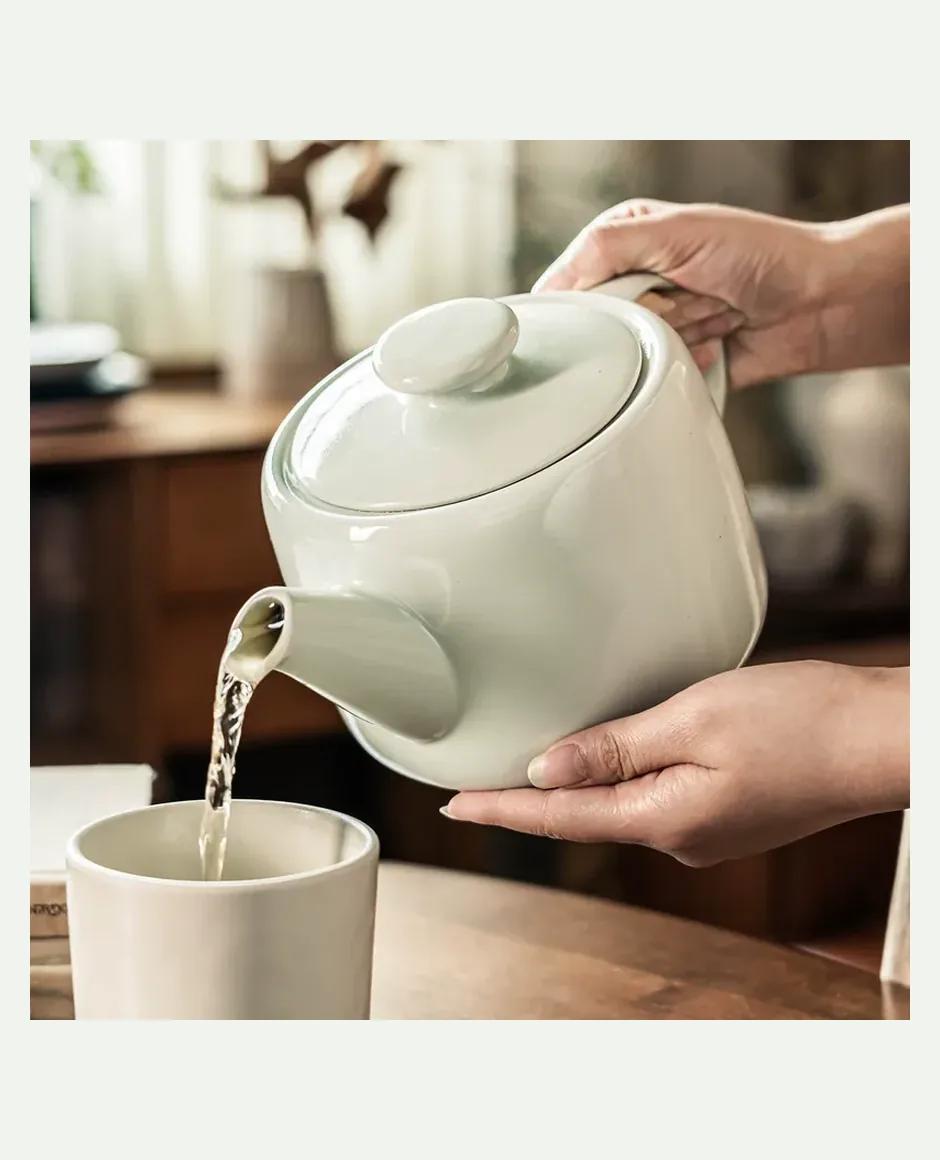
How do bone china and stoneware teapots differ in everyday use?
Bone china is whiter and more translucent, while stoneware is thicker and more robust. The right choice depends on how you serve and handle tea.
Read answer →Can I evaluate a teapot sample before committing to a bulk order?
Yes. Samples are made in about 7-10 days, so you can check shape, glaze and finish before deciding on a larger teapot order.
Read answer →Can I get lower prices per teapot if I order 300, 500, or 1000 pieces?
Yes. We quote one USD unit price per SKU and set lower prices at 300, 500 and 1000+ pieces, so you can compare tiers clearly.
Read answer →How do you check teapots for chips, cracks and glaze faults before shipping?
Every teapot is inspected for chips, cracks and glaze defects before packing, with AQL pre-shipment inspection available.
Read answer →Can teapots be packed in custom gift boxes for retail sale?
Yes. We offer branded gift boxes, inserts and foam padding for teapots, plus export cartons for bulk shipments.
Read answer →What teapot capacities do you make for tea ceremonies?
We make teapots from 200ml for solo brewing up to 1000ml for group ceremonies, in porcelain, stoneware and bone china.
Read answer →Can I choose the glaze colors and patterns on my gaiwan tea sets?
Yes. Gaiwan sets can be customized in glaze color, pattern and decals, with OEM/private label options and MOQ from one piece.
Read answer →Can your teapots go straight onto a gas flame or open fire?
Our stoneware and high-fired porcelain teapots handle direct-flame use, and every glaze is lead- and cadmium-free for food contact.
Read answer →Can I order 100 custom porcelain teapots with my logo?
Yes. MOQ is 1 piece, OEM and private label are available, and custom decals or logos can be applied to your teapots.
Read answer →
Which HS code applies when importing ceramic mugs?
Ceramic tableware falls under HS 6911 for porcelain and 6912 for other ceramics. Correct classification matters for customs clearance.
Read answer →
Can I put my own decal or logo on an order of 500 mugs?
Yes. Custom decals and logos are available, and OEM/private label work is supported. Samples are made in about 7-10 days.
Read answer →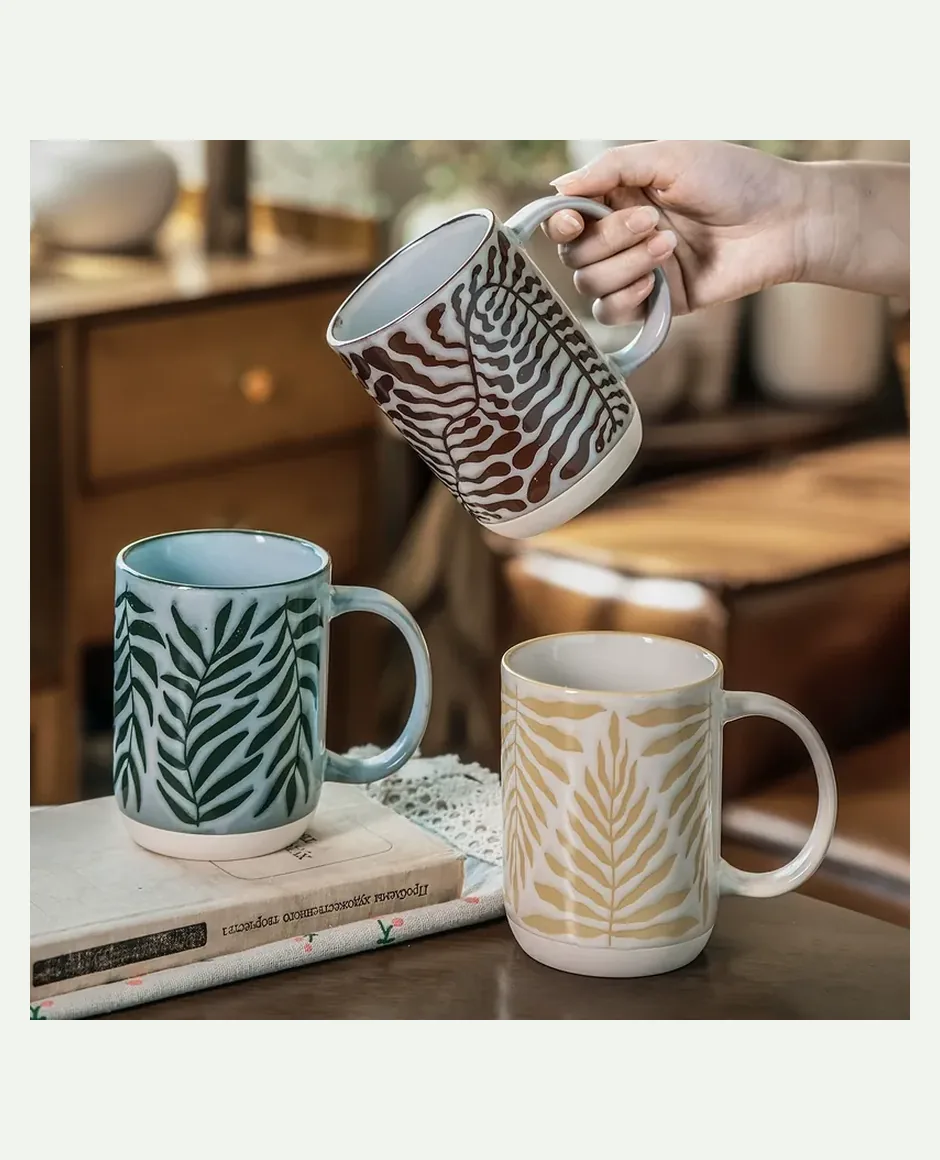
Do I pay for samples, and does that cost come off my first bulk order?
Sample costs can be credited against your first bulk order. Samples are made in about 7-10 days, so you can check quality before committing.
Read answer →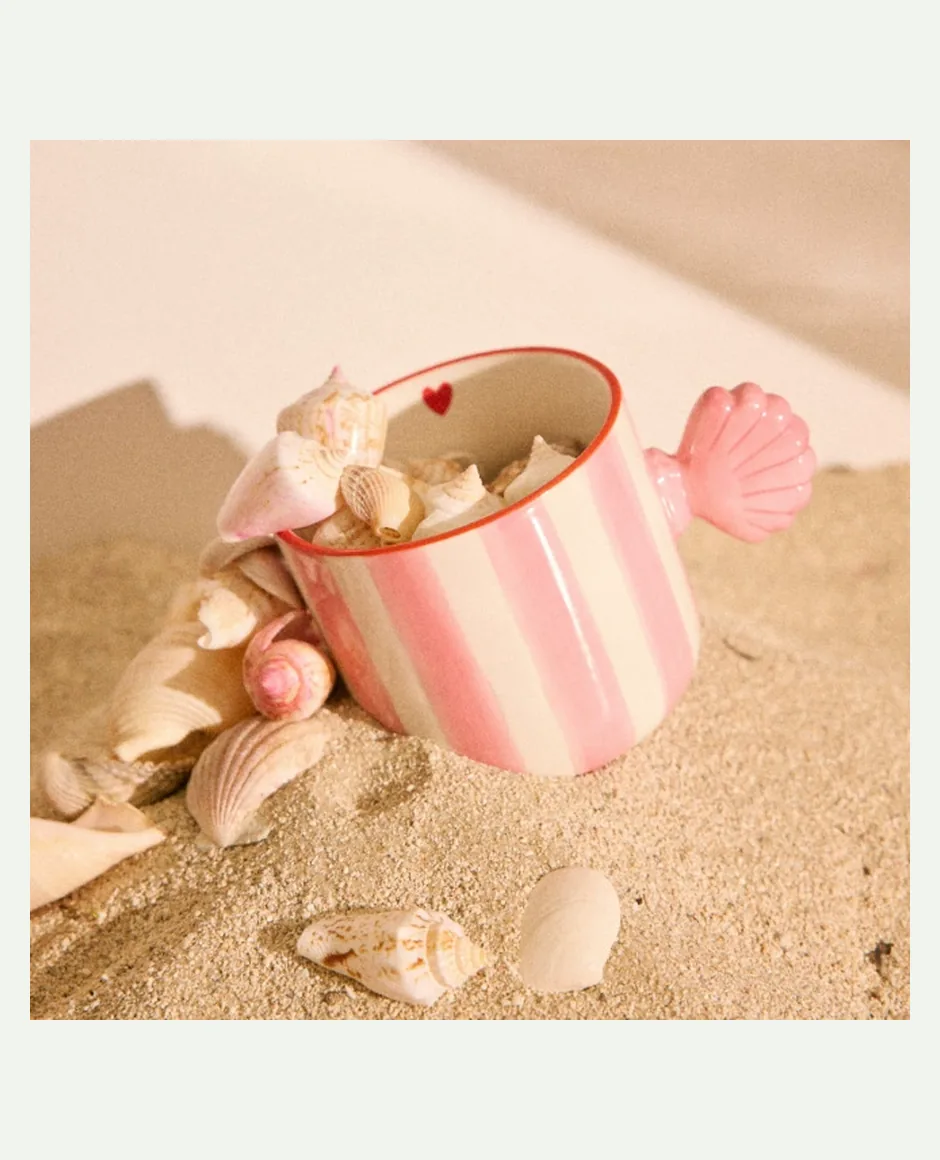
Can I get a lower unit price if I order more than 1,000 mugs of one style?
Yes. Each SKU carries one USD unit price, and larger quantities per style can be quoted at a lower price.
Read answer →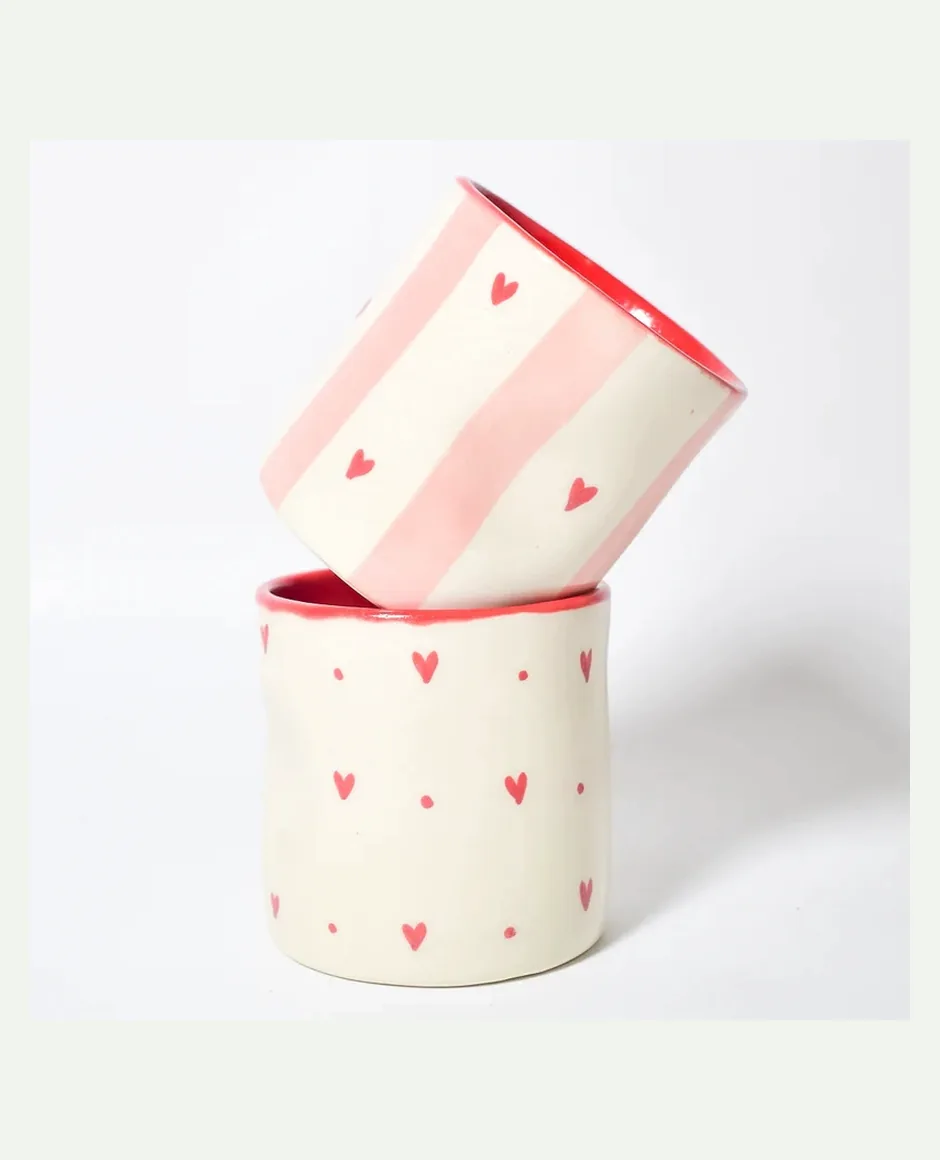
Can you provide food-safety test reports for ceramic mugs?
FDA, LFGB, and SGS food-contact testing can be arranged on request, with lead- and cadmium-free glaze options for ceramic mugs.
Read answer →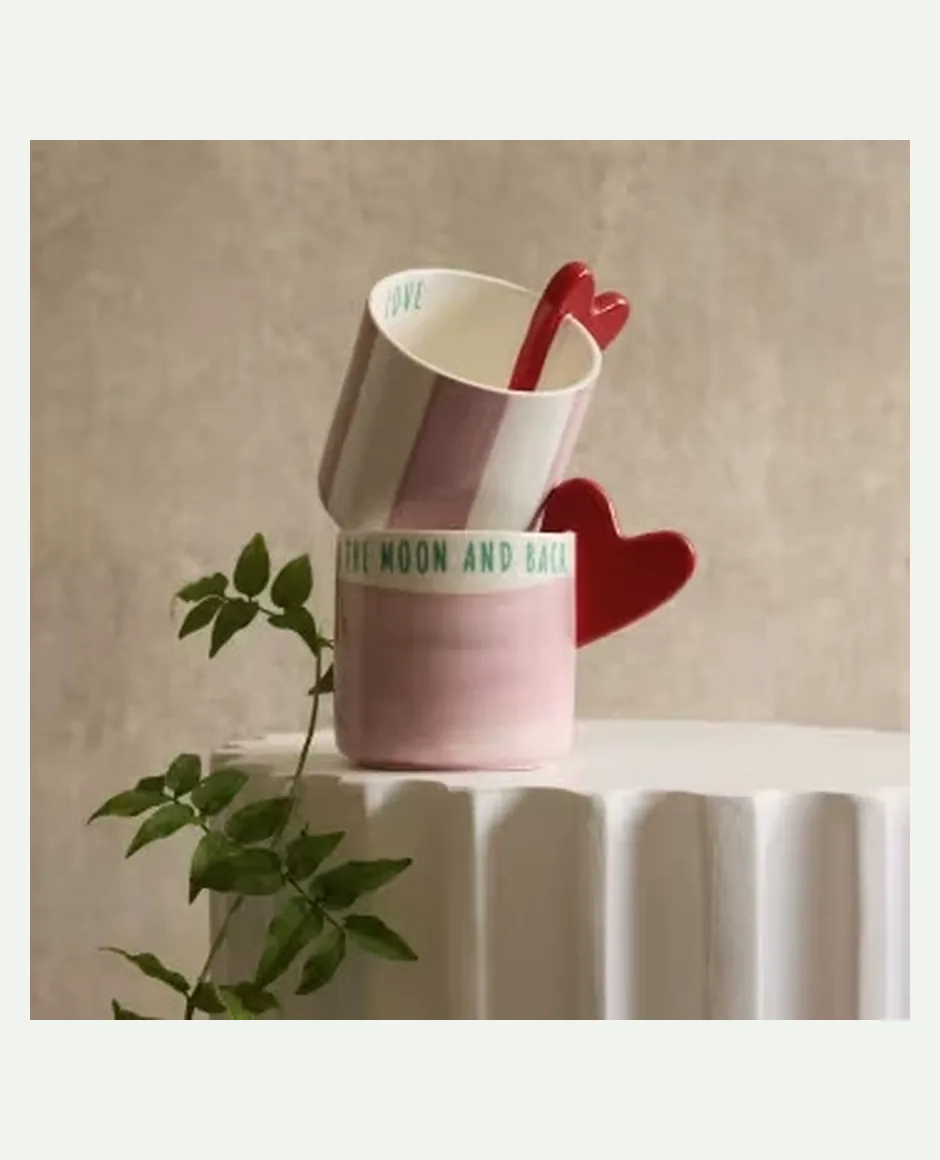
Can you make custom-shaped 250ml mugs?
Yes—custom-shaped 250ml mugs are possible with a 1-piece MOQ, OEM/private label support, and samples in about 7-10 days.
Read answer →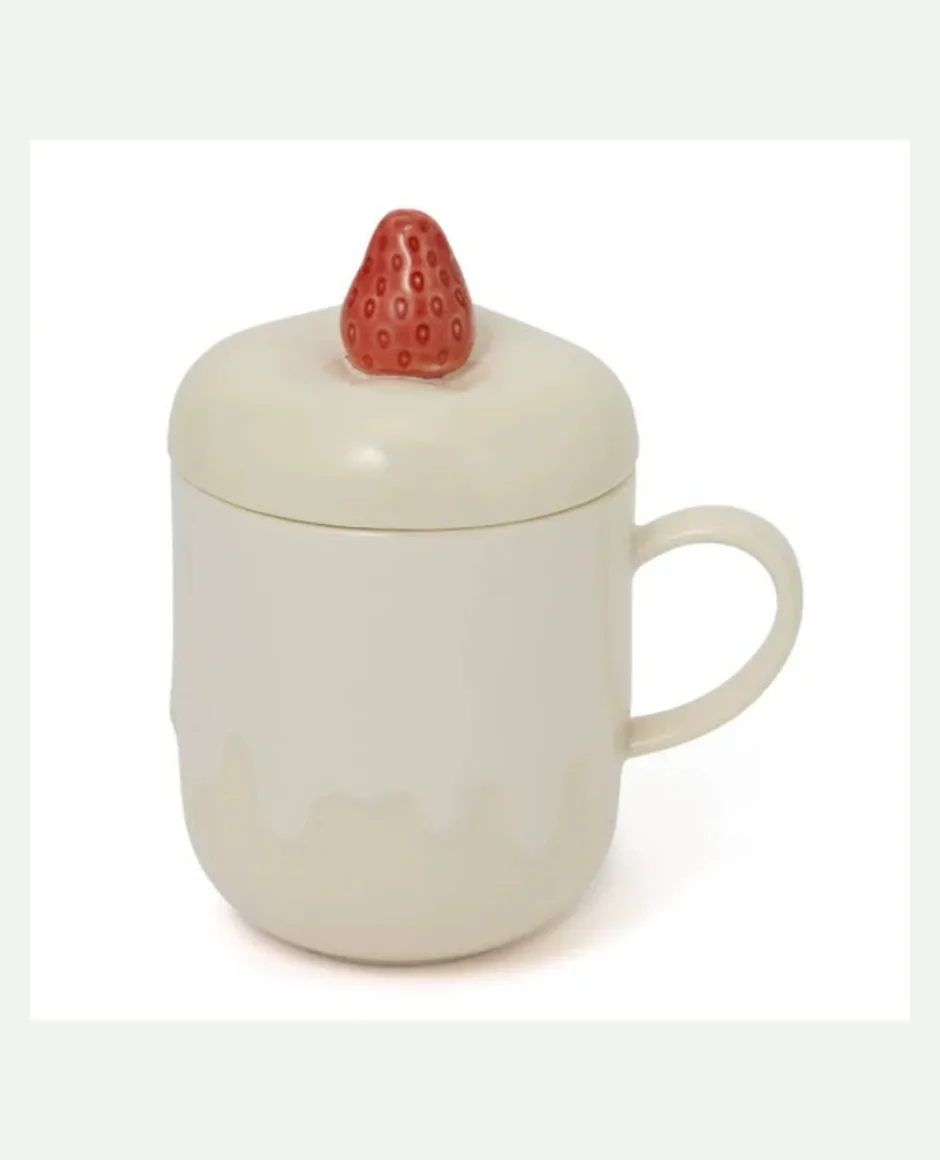
What mug designs are buyers asking for in 2025?
Minimalist shapes, soft pastel glazes, and sustainable material choices are shaping 2025 mug ranges—here is how to turn trends into orders.
Read answer →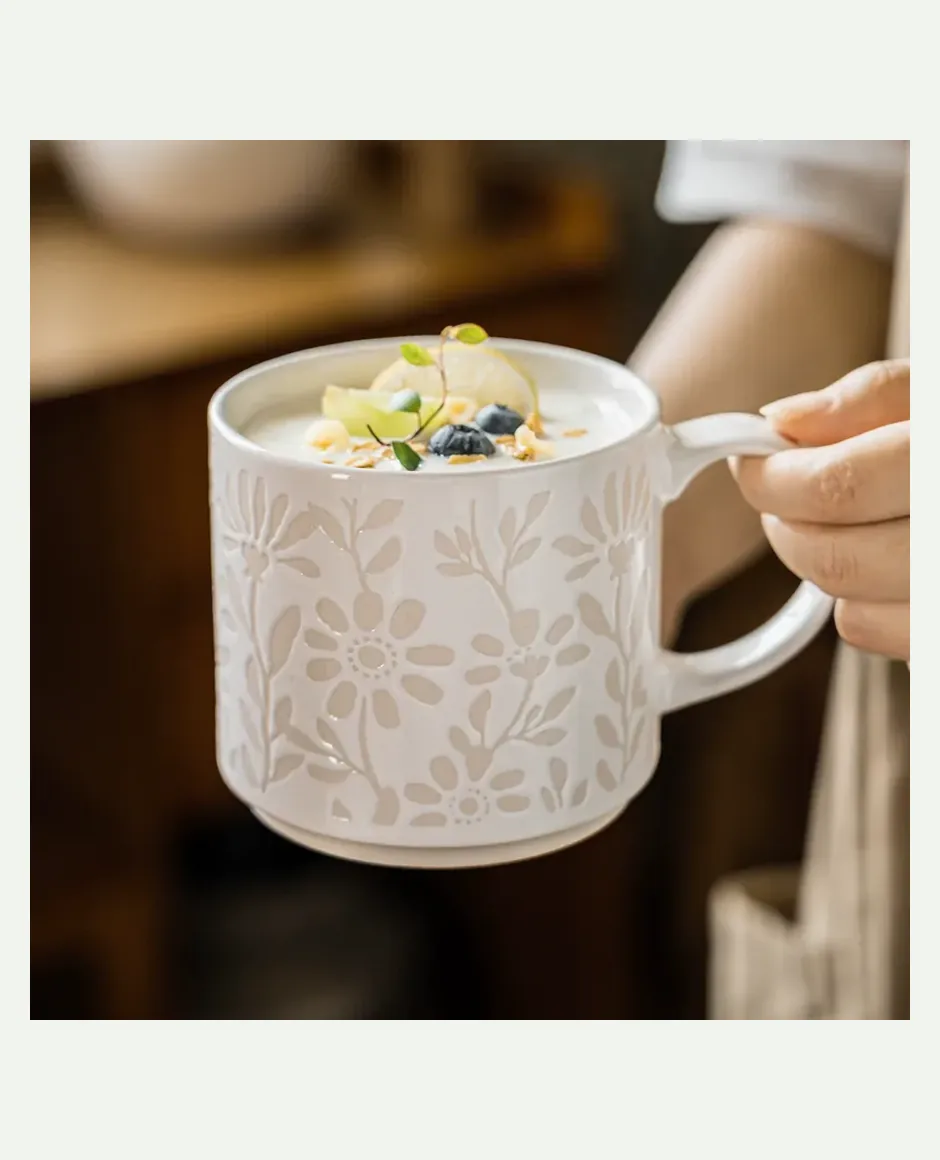
How are ceramic mugs packed to reduce breakage in transit?
Export cartons and practical packing choices help protect mugs in transit, with pre-shipment inspection and flexible order timing available.
Read answer →Which ceramic materials can I choose for my custom mug order?
Choose from bone china, new bone china, porcelain, stoneware, or dolomite—each with different weight, look, and durability for your mugs.
Read answer →Can I start with a very small custom mug order?
Yes—the minimum order is just 1 piece, so you can test a custom mug design before committing to a larger production run.
Read answer →How do you check quality and inspect ceramic mugs before shipment?
AQL pre-shipment inspection plus food-contact testing on request help confirm glaze and finish quality before your mugs ship.
Read answer →Is gift box packaging available for ceramic mugs?
Yes—gift box packaging can be arranged for ceramic mugs, with export cartons for safe shipping and AQL inspection before dispatch.
Read answer →Can two-tone glaze mugs be made in my own color combination?
Yes—custom two-tone glaze colors are possible with a low minimum, and food-contact testing can be arranged on request.
Read answer →How does your pricing change as mug order quantities go up?
One clear USD unit price per SKU, with better rates as volume grows—plus OEM and private label options for 300ml ceramic mugs.
Read answer →Can I order 500 mugs in 300ml with my logo printed on them?
Yes. Logo printing is available on 300ml mugs at 500 pieces, with a choice of bone china, porcelain, stoneware and other bodies.
Read answer →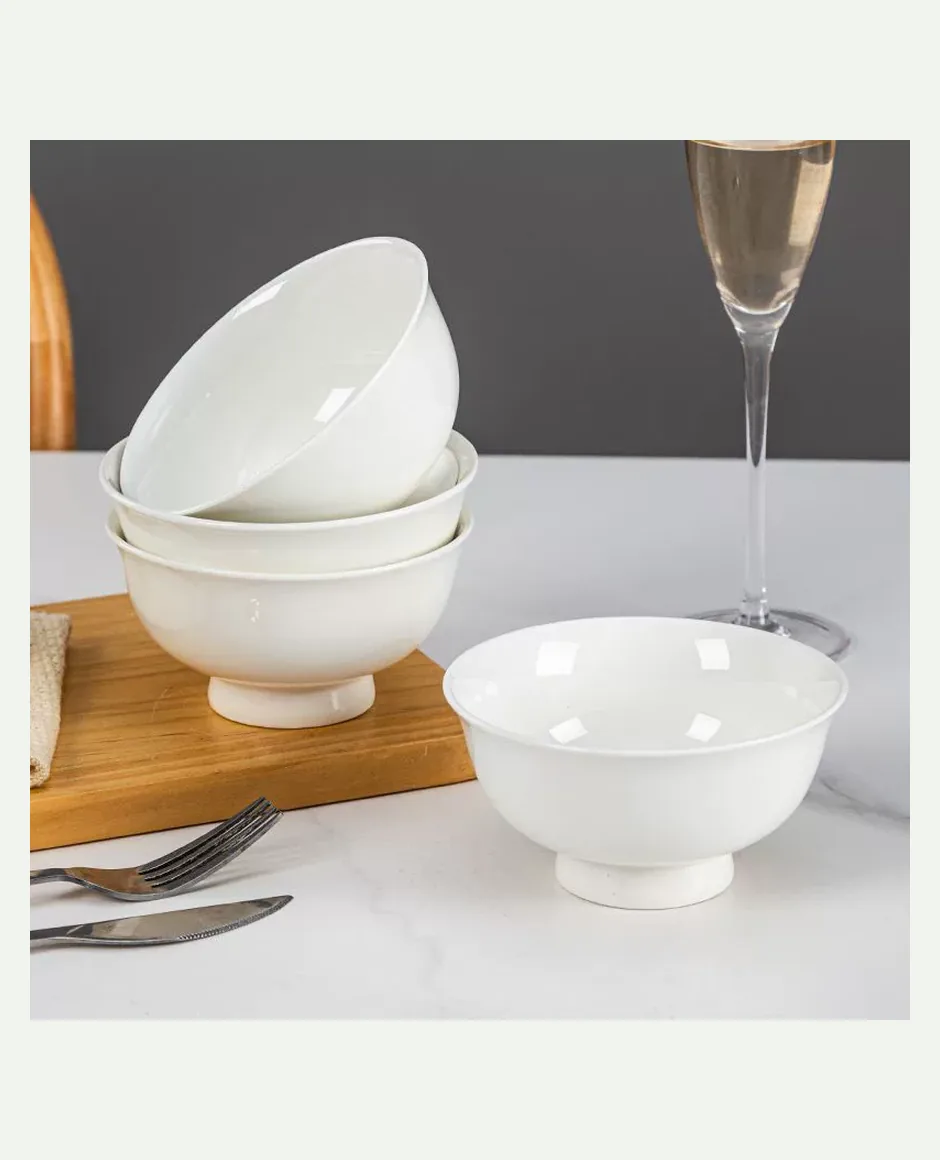
Can retail bowl sets be packed in packaging with my own branding?
Yes. We offer private label and OEM packaging, from printed cartons to inserts, so your bowl sets arrive shelf-ready for retail.
Read answer →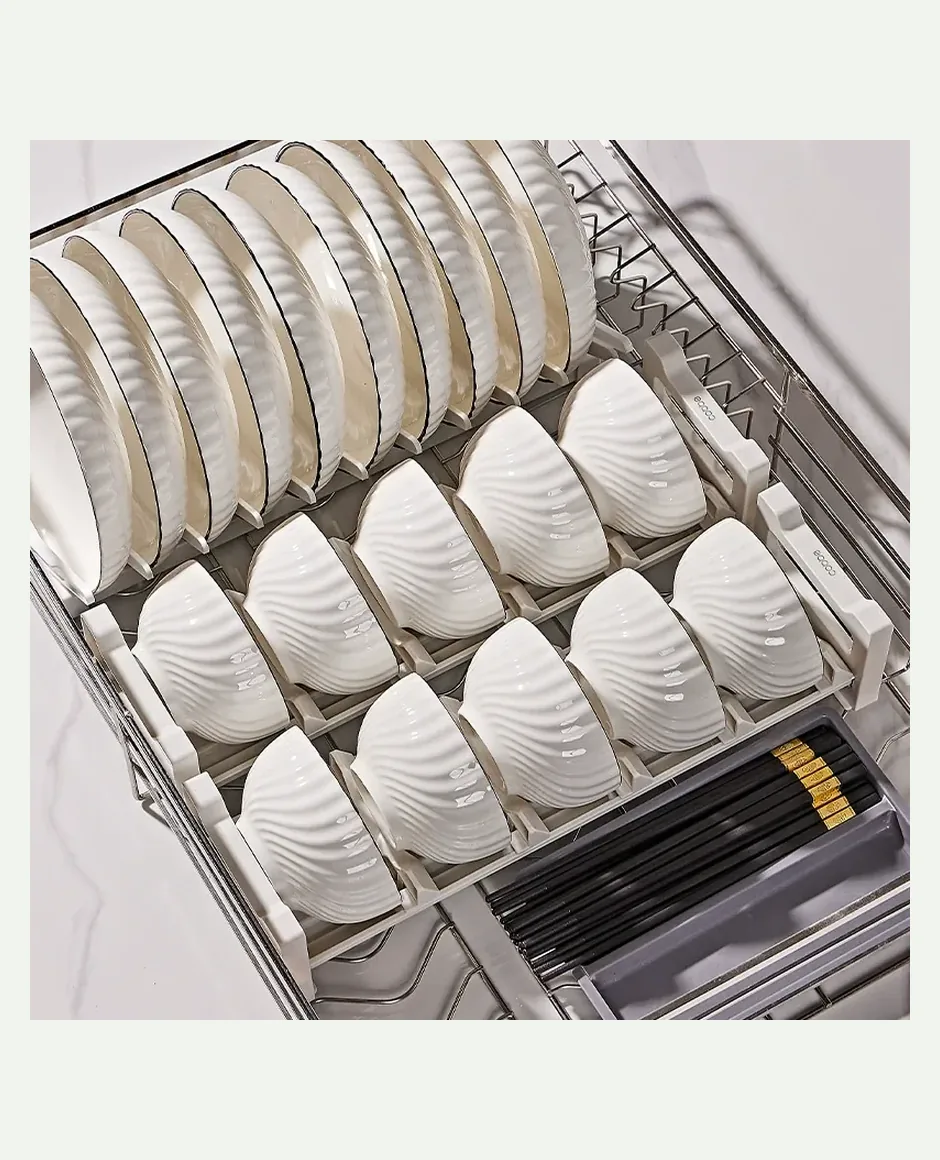
Do stoneware bowls hold up to daily restaurant use?
Stoneware is dense and chip-resistant, making it a practical choice for commercial settings. Food-contact testing is available on request.
Read answer →
Which ceramic bowl designs are buyers asking for this year?
Organic shapes, earthy tones and minimalist textures are leading demand. We can produce these looks or develop a custom design for your range.
Read answer →
How will my ceramic bowls be shipped, and when will they arrive?
Choose sea or air freight, FOB or DDP. Export cartons protect against breakage, and we can handle customs clearance on DDP terms.
Read answer →
How do you check quality before ceramic bowls are shipped?
AQL pre-shipment inspection is available on every order, with food-contact testing through FDA, LFGB and SGS on request.
Read answer →
Can you produce ceramic bowls in my own shape and glaze color?
Yes. OEM and private label are available, with samples in about 7-10 days and custom production in 20-35 days after approval.
Read answer →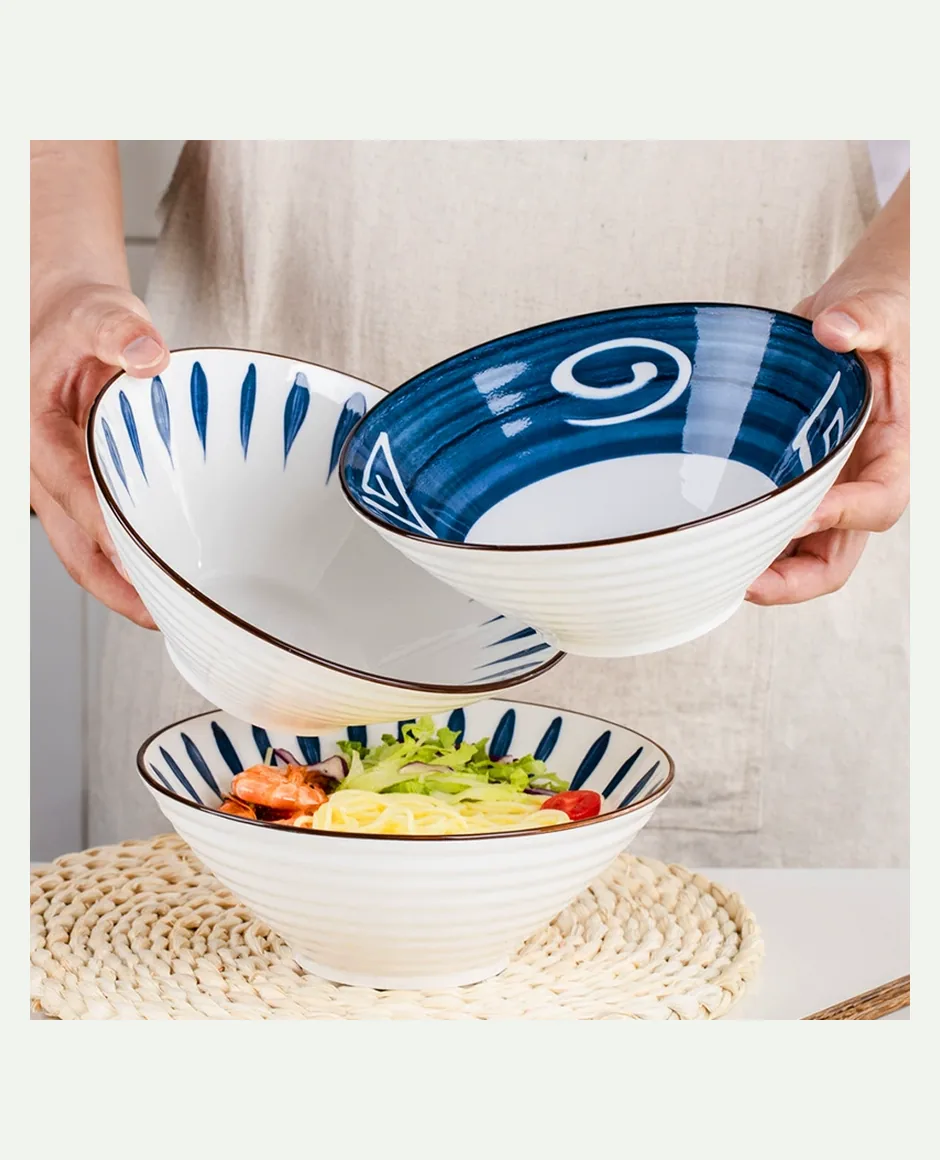
How do I request ceramic bowl samples before ordering in bulk?
Samples are made in about 7-10 days, so you can inspect glaze, shape and finish before committing to a bulk order.
Read answer →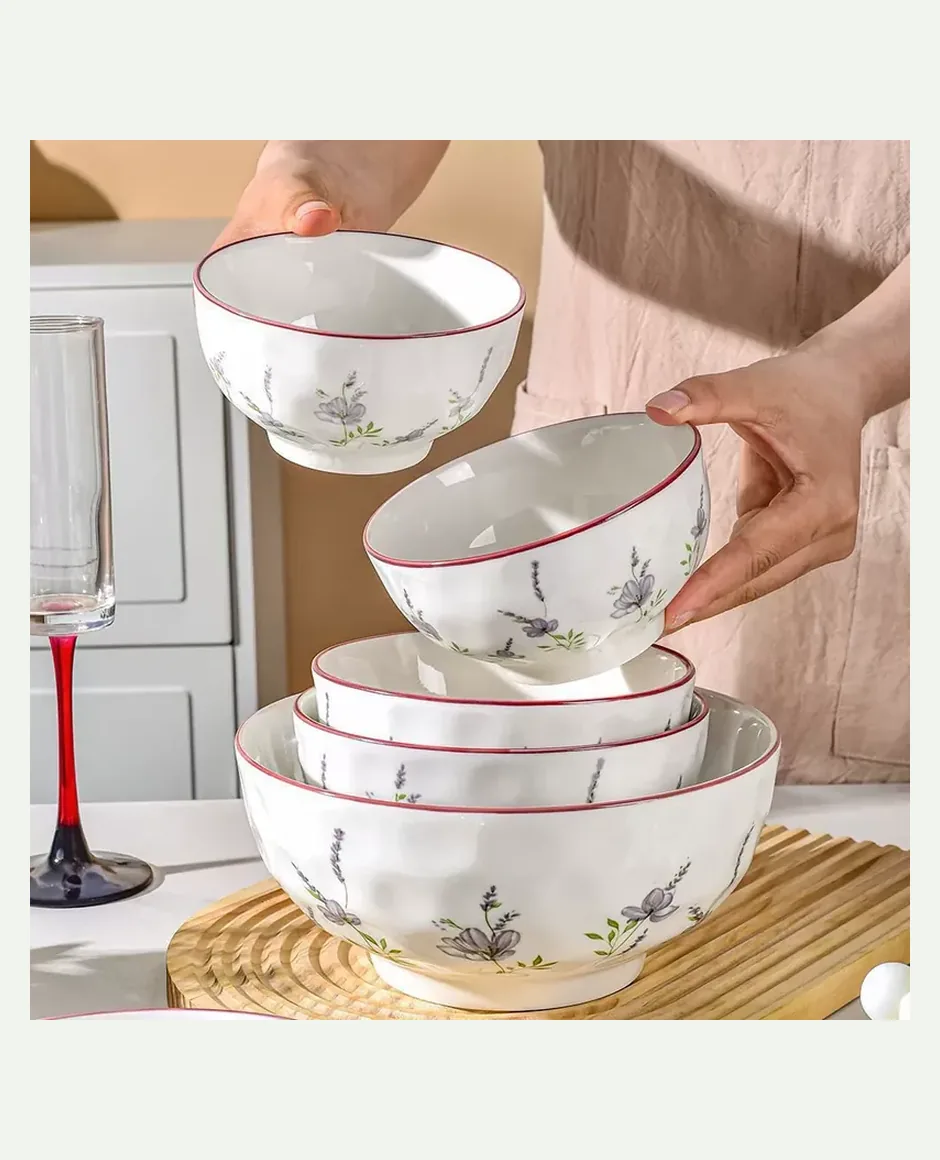
How does pricing work when I order ceramic bowls in larger volumes?
Every SKU carries one USD unit price, and the MOQ is just one piece, so you can test a style before committing to volume.
Read answer →Do your ceramic bowls contain lead or cadmium?
Our glazes are formulated without lead or cadmium, and FDA, LFGB and SGS food-contact testing is available on request.
Read answer →How are ceramic bowls packed so they arrive without breakage?
Export cartons, individual wrapping and pre-shipment inspection help ceramic bowls survive sea or air freight.
Read answer →Can bone china bowl sets be supplied in retail gift boxes?
Bone china bowl sets with custom gift box packaging for retail, plus food-contact testing available on request.
Read answer →What sizes and capacities do your noodle bowls come in?
Porcelain and stoneware noodle bowls for ramen, pho and similar dishes, with food-contact testing available on request.
Read answer →Can salad bowls be customized with my own logo?
Yes — OEM and private label salad bowls are available in porcelain or stoneware, with samples in about 7–10 days.
Read answer →Which stackable soup bowls work best for busy restaurant service?
Porcelain or stoneware stackable soup bowls built for daily restaurant use, with food-safe glazes and export-ready packing.
Read answer →Can I get custom porcelain rice bowls with my logo, and what is the minimum order?
Yes—MOQ is 1 piece, OEM and private label are available, and logo development follows a 7–10 day sample timeline.
Read answer →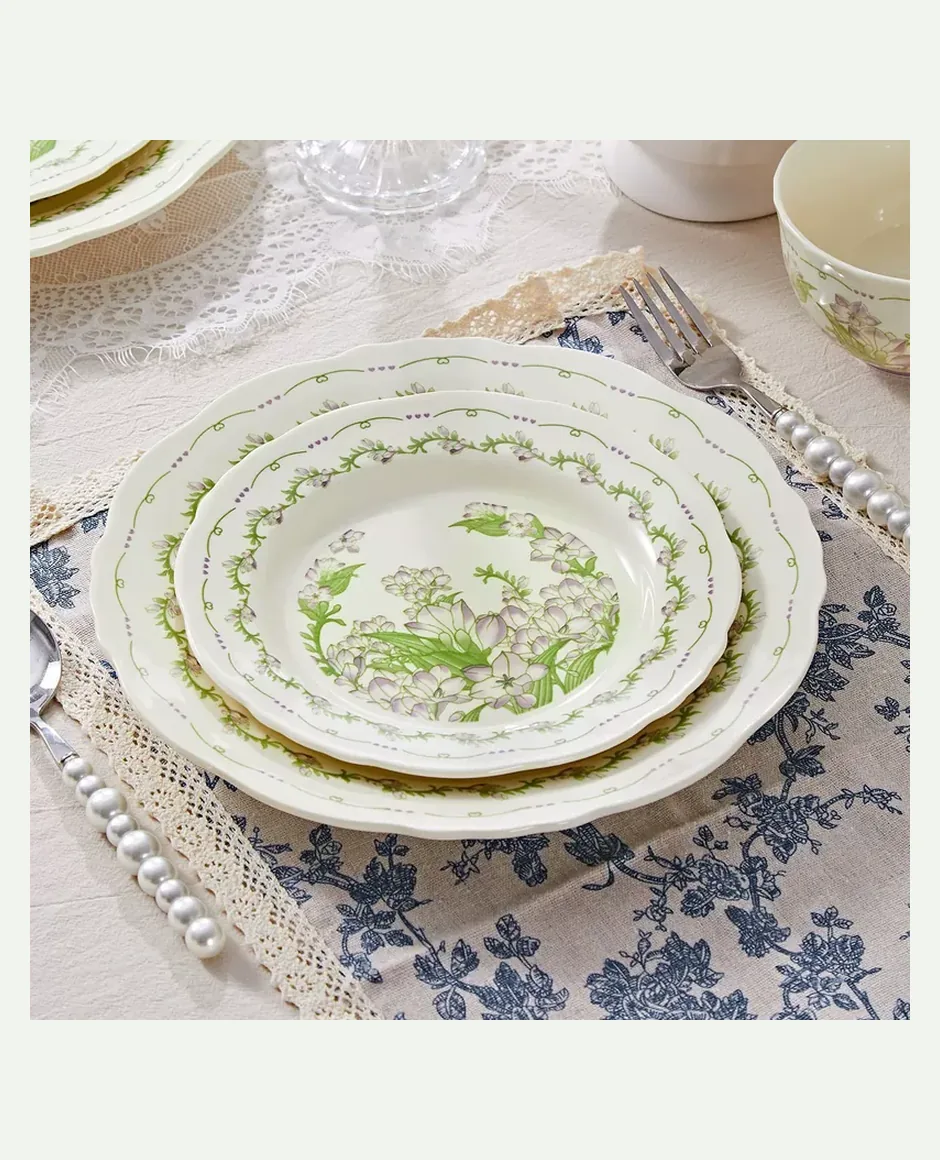
Which factories make your dinner plates?
Production runs through partner factories in Jingdezhen, Chaozhou, Liling and Jingshan—four established Chinese ceramic hubs.
Read answer →How do I pay for a dinner plate order?
Orders are confirmed with a 30% T/T deposit and the balance before shipment; PayPal is also accepted for convenience.
Read answer →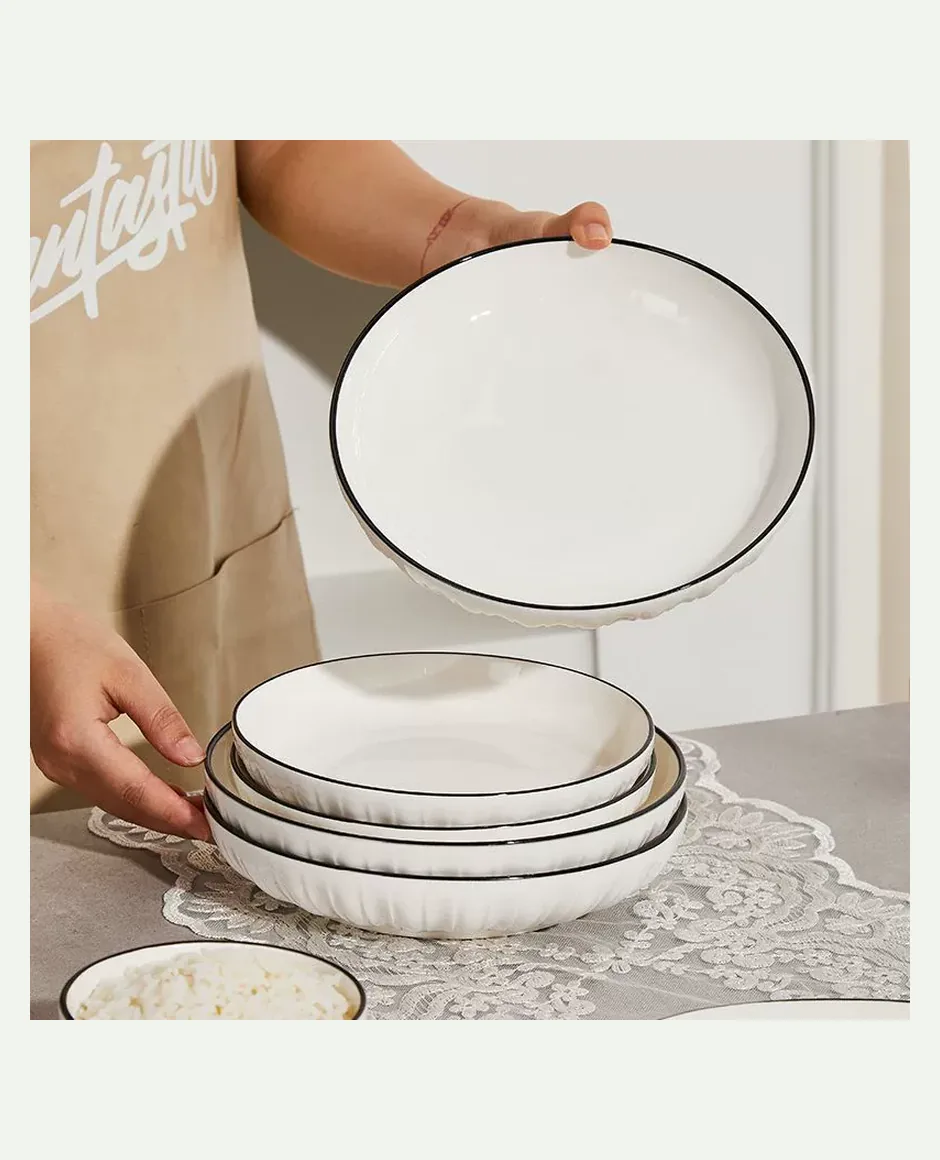
Which HS code applies to dinner plates, and how are import duties set?
Porcelain plates sit under HS 6911 and other ceramic plates under 6912; duty rates depend on your destination country's tariff schedule.
Read answer →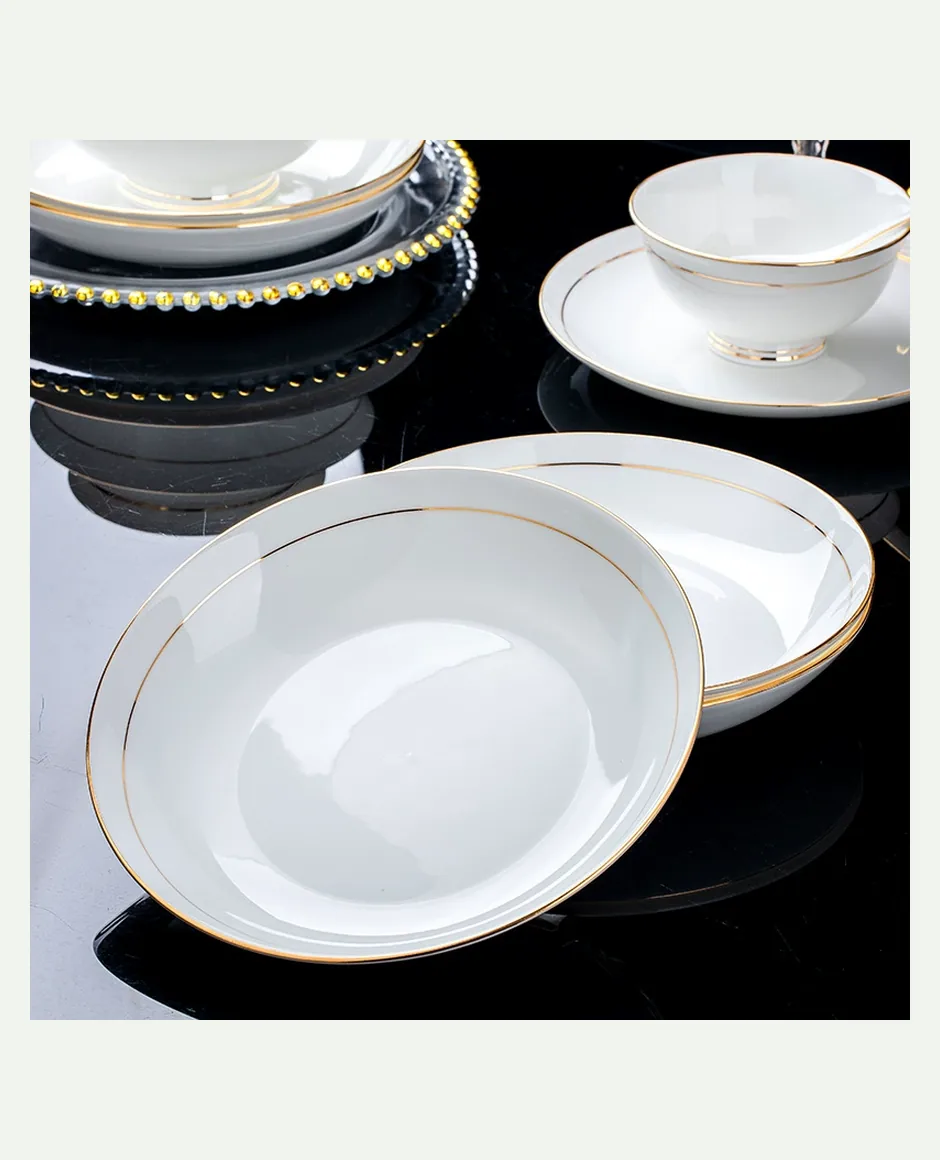
Which dinner plate styles are buyers asking for in 2025?
Organic silhouettes, warm earthy glazes and understated textures are shaping 2025 plate assortments—and custom development is open.
Read answer →Which dinner plates hold up best in a busy restaurant?
Look for durable porcelain or stoneware, a practical plate size, and a supplier who can test food-contact safety and inspect each batch.
Read answer →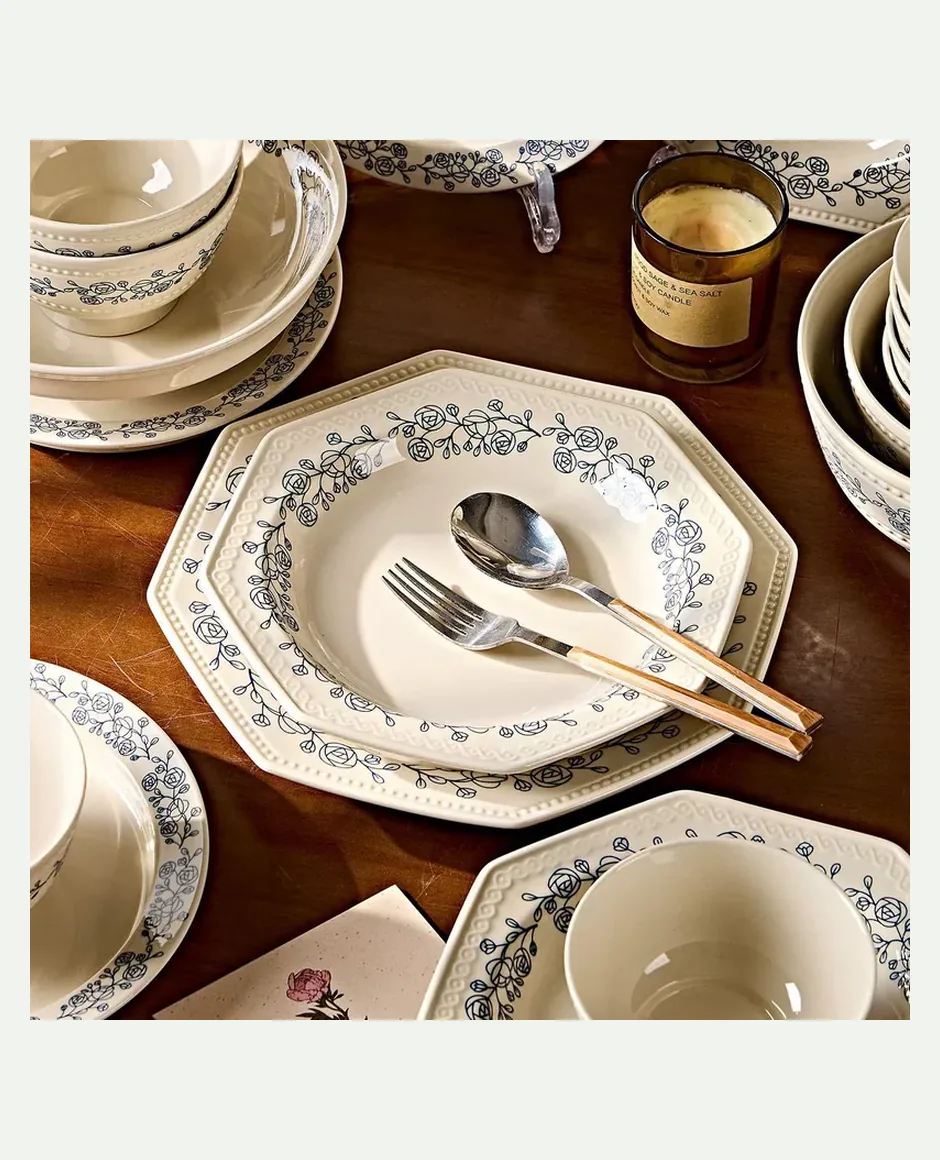
How are dinner plates packed so they arrive without chips or cracks?
Plates are wrapped and cushioned inside export cartons, with AQL pre-shipment inspection before the order ships.
Read answer →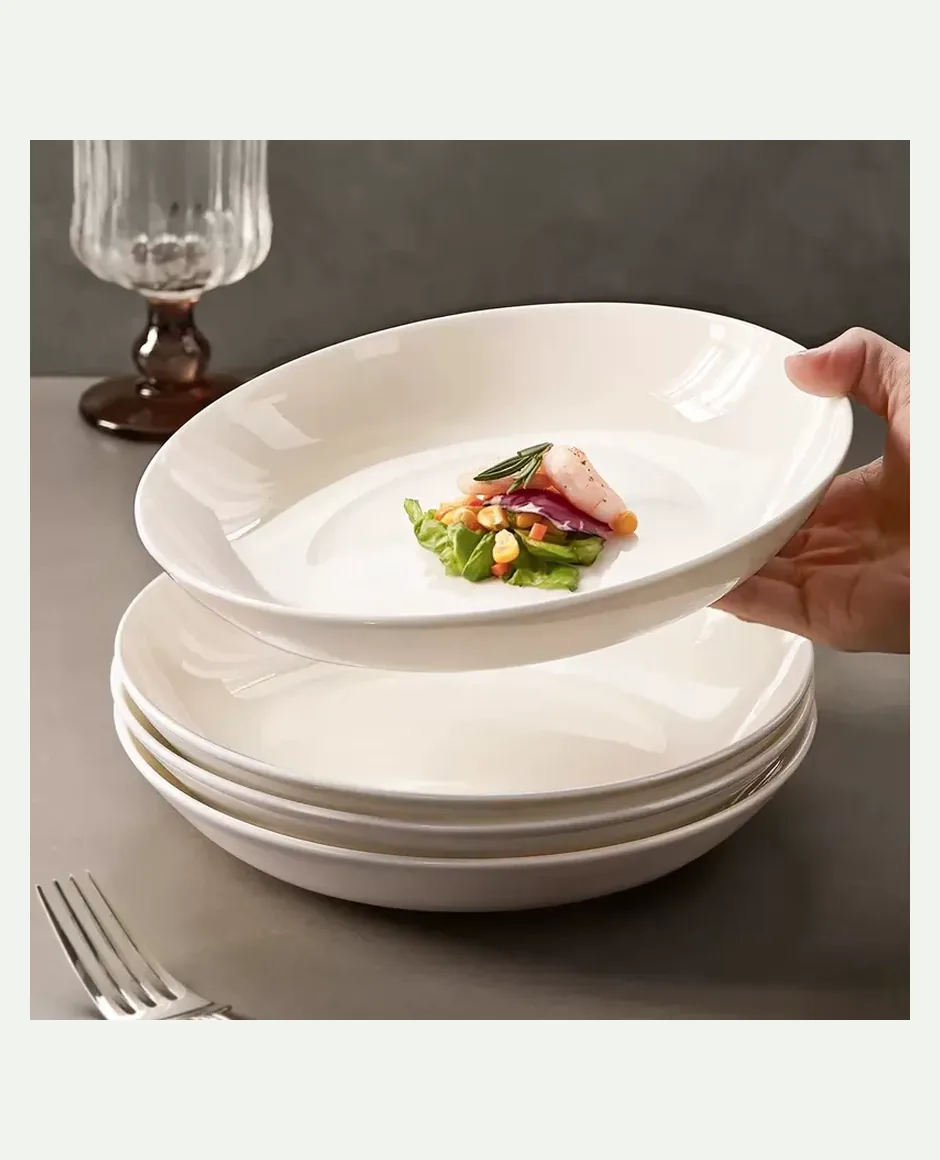
Can I get dinner plate samples before committing to a bulk order?
Yes. Samples are made in about 7-10 days so you can check glaze, weight and finish before placing a larger order.
Read answer →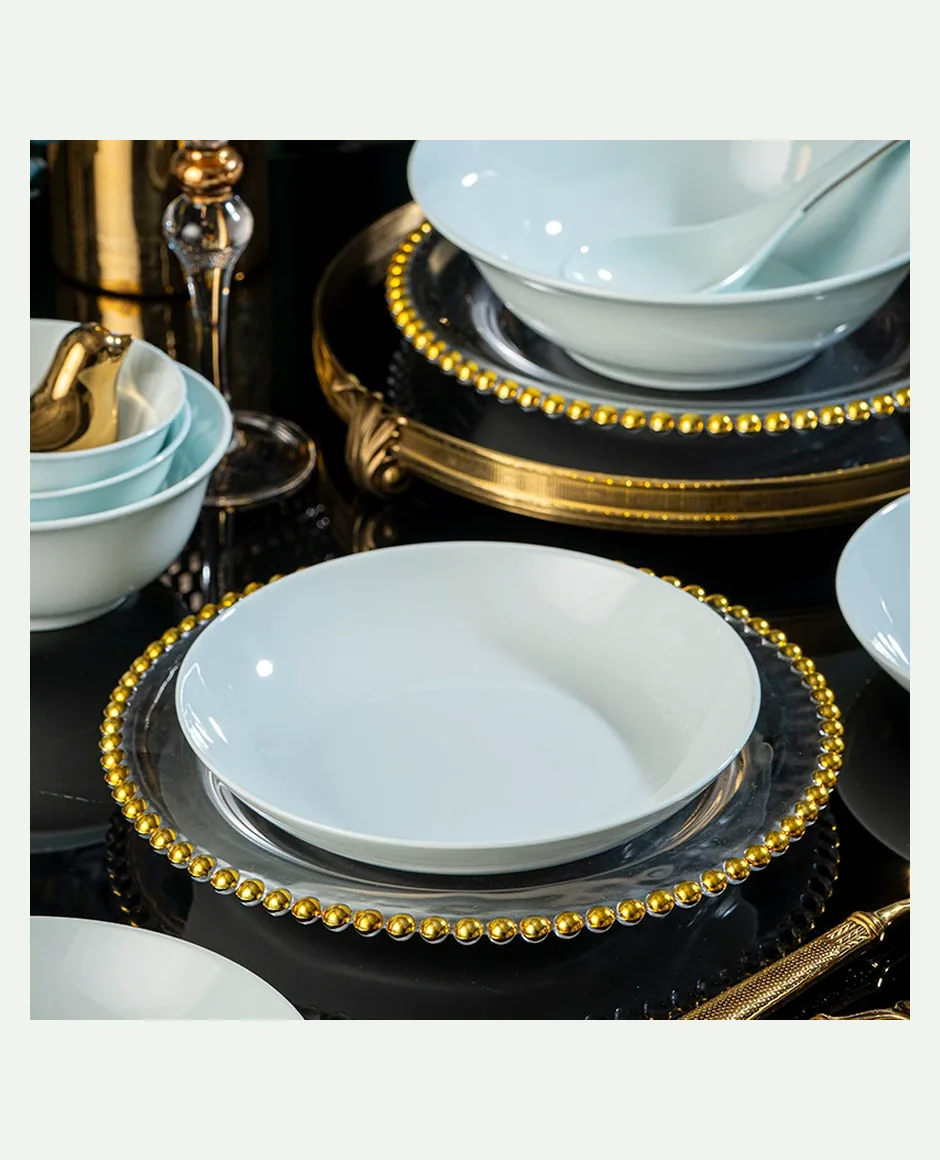
Does the price per dinner plate go down when I order more?
We quote one single USD unit price per SKU, so pricing stays clear as you compare styles and plan your order quantities.
Read answer →How do you check the quality of dinner plates before shipping?
Plates are checked under AQL pre-shipment inspection, with FDA, LFGB and SGS food-contact testing available on request.
Read answer →How are dinner plates packed, and can I get gift boxes for retail?
Plates ship in export cartons with protective wrapping. Custom gift boxes with your branding are available for retail and premium sets.
Read answer →Can you make dinner plates in my own shape, glaze color and decal design?
Yes. OEM and private label are available for shape, glaze color and decals. Samples are made in about 7-10 days so you can approve before bulk production.
Read answer →Porcelain, stoneware or bone china: which should I pick for dinner plates?
Porcelain is durable and bright white, stoneware resists chipping with a rustic look, and bone china is light and translucent for fine dining.
Read answer →How long until my dinner plate order is produced and delivered?
Samples take about 7-10 days; stock ships in 7-15 days; custom orders take 20-35 days after sample approval. Transit time depends on your destination.
Read answer →What dinner plate diameters can I order for my restaurant?
Dinner plates come in 6 to 12 inch diameters. Restaurants most often choose 10.5 or 11 inch plates for mains, with 8 and 9 inch for starters.
Read answer →What is the MOQ for dinner plates with my own logo?
Custom logo plates carry a higher MOQ than stock designs, so test the market with a small run first, then scale into private label once demand is proven.
Read answer →Can you ship ceramic tableware DDP to my door?
Yes, DDP shipping is available to many destinations. We handle clearance, freight, insurance, duty and taxes, and you receive one fixed total.
Read answer →How long does it take to ship ceramic tableware from China?
Transit time depends on mode: sea, air or express. Add production time on top, so plan your launch date around both stages, not just freight.
Read answer →Will I owe import duty and VAT on porcelain from China?
In most markets you pay both a customs duty and a VAT or GST on porcelain imports. Rates follow the HS code and destination, so confirm locally.
Read answer →How much will it actually cost to land ceramic dinnerware at my door?
Landed cost covers the piece price, freight, insurance, duty and taxes. Ask for a DDP quote and you see one fixed total before you commit.
Read answer →Is sea freight or air freight better for my ceramic tableware order?
Sea freight keeps bulk costs down but needs planning. Air freight costs more and suits urgent restocks, high-value pieces or tight deadlines.
Read answer →How do you pack ceramic tableware so it survives export shipping?
Reinforced export cartons, individual bubble wrap and foam dividers keep pieces apart and absorb impact through sea or air transit.
Read answer →Should I buy ceramic tableware on FOB or DDP terms?
FOB puts logistics in your hands and often lowers the upfront price. DDP bundles freight, duty and taxes into one delivered cost.
Read answer →How much duty will I owe on ceramic tableware imported from China?
Duty is set by your country and classified under HS 6911 or 6912. Confirm the exact rate with a licensed customs broker before you commit.
Read answer →What should I expect to pay to ship ceramic tableware out of China?
Your freight bill depends on mode, weight, volume and destination. Sea freight usually wins on bulk cost; air and express trade money for speed.
Read answer →What HS code applies to ceramic tableware and porcelain?
Porcelain tableware is classified under HS 6911 and other ceramic tableware under HS 6912, which customs uses to set duties and rules.
Read answer →How many kitchen accessory styles can I choose from?
Our range covers kitchen accessories such as utensil holders, chopstick holders, spoon rests, storage jars, and more, made with partner factories in Jingdezhen and other hubs.
Read answer →How do you ship kitchen accessories worldwide, and which terms can you offer?
We ship worldwide by sea or air freight and can quote FOB or DDP terms, so you can match the method to your budget and deadline.
Read answer →Which HS code should I use for ceramic kitchen accessories?
Porcelain kitchen accessories fall under HS 6911 and other ceramics under HS 6912; we list the applicable code on your export documents.
Read answer →Are your kitchen accessories safe for food contact, and what testing can you provide?
Glazes are lead- and cadmium-free, and FDA, LFGB, and SGS food-contact testing is available on request, with reports supplied for your order.
Read answer →How long does a kitchen accessory order take to produce and ship?
Samples take about 7-10 days; custom kitchen accessory orders run 20-35 days after sample approval, with in-stock items shipping in 7-15 days.
Read answer →Which ceramic materials can kitchen accessories be made in?
Kitchen accessories can be produced in bone china, new bone china, porcelain, stoneware or dolomite, each with a different feel and weight.
Read answer →Can I combine several kitchen accessory styles in one order?
Yes. Because the minimum is one piece per SKU, you can build a mixed order across utensil holders, spoon rests, jars and more.
Read answer →What is the minimum order for ceramic utensil holders and spoon rests?
Kitchen accessories such as utensil holders, spoon rests and storage jars start at one piece per SKU, with OEM and private label available.
Read answer →How do I pay for a dinner set order?
Dinner set orders run on T/T with a deposit up front and the balance before shipment, with PayPal also accepted for convenience.
Read answer →Can I see a dinner set sample before placing an order?
Yes. Samples are made in about 7-10 days so you can check glaze, weight and finish before committing to a bulk order.
Read answer →How long does a dinner set order take to produce?
Samples in about 7-10 days; custom orders 20-35 days after sample approval; in-stock orders ship in 7-15 days.
Read answer →Which ceramic materials can dinner sets be made from?
Bone china, new bone china, porcelain, stoneware and dolomite. FDA, LFGB and SGS food-contact testing available on request.
Read answer →Do dinner sets come in gift packaging for retail?
Gift-box presentation is something we can arrange for dinner sets. OEM/private label available; samples in about 7-10 days.
Read answer →Can I choose which pieces go into a dinner set?
Build a set around your market: add bowls, drop plates, or adjust the mix. Single-piece MOQ, one USD price per SKU, OEM available.
Read answer →Which piece counts are available for ceramic dinner sets?
Dinner sets can be configured to your needs, from compact service-for-four sets to larger family configurations.
Read answer →What is the minimum order for ceramic dinner sets from China?
MOQ is 1 piece, so you can test a dinner set design with a small order before committing to bulk volumes.
Read answer →Can I see a sample before placing a bulk ceramic order?
Yes—samples are made in about 7-10 days so you can check glaze, shape and decoration before bulk production.
Read answer →How can I pay for a bulk ceramic order?
A practical look at payment, pricing and shipping terms for bulk ceramic tableware orders from China.
Read answer →Can coffee mugs be branded with my own logo?
Yes—custom logos are possible on ceramic mugs, with food-safe glazes and samples ready in about 7-10 days.
Read answer →Do your coffee cups pass FDA food-contact rules?
Coffee cups use lead- and cadmium-free glazes, with FDA, LFGB and SGS food-contact testing available on request for your order.
Read answer →How quickly can coffee cups reach the USA?
Delivery to the USA depends on your shipping method and order type, from stocked goods to custom production runs.
Read answer →What capacity do your latte cups come in?
Latte cups in 300ml suit large milk-based drinks, with one-piece minimums and food-safe glazes for cafe and hotel use.
Read answer →Can I buy cappuccino cups and saucers in larger quantities?
Bulk cappuccino cup-and-saucer sets are straightforward: one-piece minimums, OEM branding, and food-safe glazes tested on request.
Read answer →How few espresso cups can I order from a Chinese supplier?
Start small: espresso cups ship from a single piece, with OEM logos and food-contact testing available when you scale up.
Read answer →What payment terms do you accept for serving dishes and kitchen items?
T/T with a 30% deposit and balance before shipment; PayPal is also accepted for convenience.
Read answer →How do you ship serving dishes and storage jars, and which Incoterms can I use?
Worldwide sea or air freight with FOB or DDP terms, plus export cartons and AQL pre-shipment inspection.
Read answer →Do your storage jars with silicone-seal lids meet food-contact safety standards?
Glazes are lead- and cadmium-free, and FDA, LFGB, and SGS food-contact testing is available on request.
Read answer →Which ceramic materials are available for serving dishes and storage jars?
Choose from bone china, new bone china, porcelain, stoneware, and dolomite, each suited to different looks and use cases.
Read answer →What is the lead time for serving dishes and storage jars from order to delivery?
Samples in 7-10 days; custom production 20-35 days after sample approval; in-stock orders ship in 7-15 days.
Read answer →Can condiment bowls carry my logo, and what is the minimum for custom decals?
Condiment bowls can be branded with custom decals through OEM/private label; ask us for the minimum quantity for your design.
Read answer →Can stoneware serving dishes go in the oven?
Stoneware serving dishes can move from oven to table, and food-contact testing to FDA, LFGB and SGS is available on request.
Read answer →What is the minimum order for serving dishes and storage jars?
Serving dishes and storage jars start at an MOQ of 1 piece, with OEM/private label available and one USD price per SKU.
Read answer →How do I pay for a teapot order?
Payment terms for teapot and teaware orders are arranged directly with our team; ask for details when you request your quote.
Read answer →Can I buy complete tea sets that include a teapot?
Matched tea sets with teapots, gaiwans and cups are available, with OEM branding and a one-piece minimum order.
Read answer →What HS code applies to ceramic teapots for export?
Porcelain teapots usually fall under HS 6911; other ceramic teapots under 6912. We can provide the code documentation for your shipment.
Read answer →Are your teapots safe to use with food and drinks?
FDA, LFGB and SGS food-contact testing is available on request. High-fired porcelain and stoneware are non-porous and resist staining.
Read answer →How long will my teapot order take to produce and ship?
In-stock teapots ship in 7-15 days; custom orders take 20-35 days after sample approval. Samples take about 7-10 days.
Read answer →Which ceramic materials can I choose for teapots?
Teapots come in bone china, new bone china, porcelain, stoneware and dolomite. Here is how to pick the right body for your buyers.
Read answer →Can I put my own logo on your teapots?
Yes. We offer OEM and private label decoration on teapots, gaiwans and tea sets, with samples in about 7-10 days.
Read answer →What is the minimum order quantity for ceramic teapots from China?
Our MOQ is 1 piece, so you can order a single teapot sample or start with a small trial run before scaling up.
Read answer →Are your mugs safe for food and drink contact?
Yes. Our mugs can be tested to FDA, LFGB and SGS food-contact standards on request, with reports arranged before your order ships.
Read answer →How can I pay for a mug order?
We accept T/T and PayPal for mug orders, with one single USD unit price per SKU so costs stay clear from quote to shipment.
Read answer →Can I order samples before committing to a bulk mug purchase?
Yes. Samples are made in about 7-10 days so you can check glaze, shape and print quality before placing a bulk order.
Read answer →How long does it take to receive a mug order?
Custom mugs take 20-35 days after sample approval; in-stock mugs ship in 7-15 days, with samples ready in about 7-10.
Read answer →Do you make mugs with two different glaze colors?
Two-tone glazing pairs contrasting interior and exterior colors, and it can be combined with fired logo decals across all mug sizes.
Read answer →Which mug and tumbler capacities can I order?
Choose from 250ml, 300ml, 350ml, 400ml and 500ml capacities, with a one-piece minimum and a single USD price per SKU.
Read answer →Can you put my logo on mugs as a fired decal?
Custom logo decals are fired into the glaze for a durable, professional finish, and two-tone glazing can add a distinctive look.
Read answer →How low can the minimum order be for ceramic mugs from China?
Start with a single piece, add your own logo when ready, and choose from a range of mug sizes without large upfront commitments.
Read answer →Can these bowls handle daily restaurant service?
Stackable, durable bowls built for busy kitchens, with low minimums so you can test styles before committing to volume.
Read answer →How do shipping and payment work when I order ceramic bowls for export?
Sea or air freight, FOB or DDP terms, export cartons and AQL pre-shipment inspection, with a single USD unit price per SKU.
Read answer →Can I put my own logo or design on ceramic bowls?
Yes, OEM and private label are available with MOQ of 1 piece, so you can test a design before scaling to a full production run.
Read answer →Are your ceramic bowls safe for food contact and can you provide test reports?
FDA, LFGB and SGS food-contact testing is available on request, so you can verify safety before your bowls reach the table.
Read answer →How long will my ceramic bowl order take to produce and arrive?
Samples in about 7-10 days, stock orders ship in 7-15 days, and custom orders take 20-35 days after sample approval, plus transit.
Read answer →What bowl sizes and styles can I order for my restaurant or store?
From 4 to 9 inch rice, soup, salad and noodle bowls, all stackable for tight storage in busy kitchens or retail shelves.
Read answer →Which ceramic materials can I choose for bowls?
Porcelain, bone china and stoneware bowls are all available, with FDA, LFGB and SGS food-contact testing offered on request.
Read answer →What is the minimum order quantity for ceramic bowls from China?
Ceramic bowls start at a low MOQ so you can test the market before scaling—custom decoration raises the minimum per style.
Read answer →How can I pay for a dinner plate order?
Payment terms for dinner plate orders are arranged directly with us—confirm the method and schedule before production begins.
Read answer →Which HS code should I use when importing dinner plates?
Ceramic dinner plates are classified under HS 6911 for porcelain or 6912 for other ceramics—use the right code for smooth customs clearance.
Read answer →Can I put my own logo or design on dinner plates?
Yes—custom decals and underglaze patterns are available for dinner plates, with samples in about 7-10 days and OEM/private label support.
Read answer →How long does it take to receive a dinner plate order?
Sample plates take about 7-10 days. Custom bulk orders run 20-35 days after approval, and in-stock orders ship in 7-15 days.
Read answer →Can these dinner plates go in the dishwasher and microwave?
Porcelain and stoneware plates handle both dishwasher and microwave use. Bone china with a gold rim is the exception for microwaves.
Read answer →What plate sizes can I order to build a full table setting?
Dinner plates range from 6 to 12 inches, covering side, dessert and main plates so you can source a complete setting from one supplier.
Read answer →Which materials can I choose for dinner plates?
Porcelain, stoneware and bone china each bring different durability and looks to dinner plates. Here is how to pick the right one.
Read answer →How few custom dinner plates can I order from a Chinese supplier?
Custom dinner plates start at just one piece, with OEM and private label options available from partner factories across China.
Read answer →